Last updated November 21, 2026
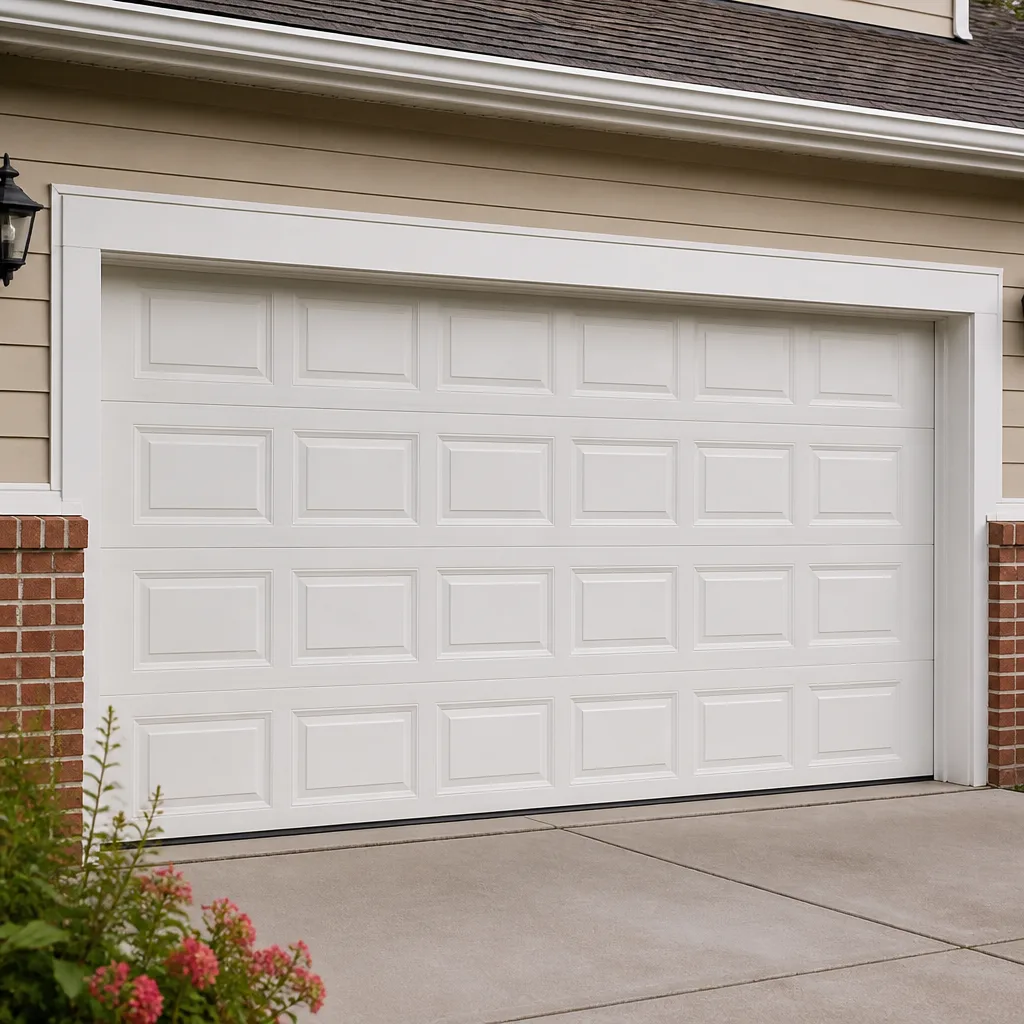 Raised-panel steel
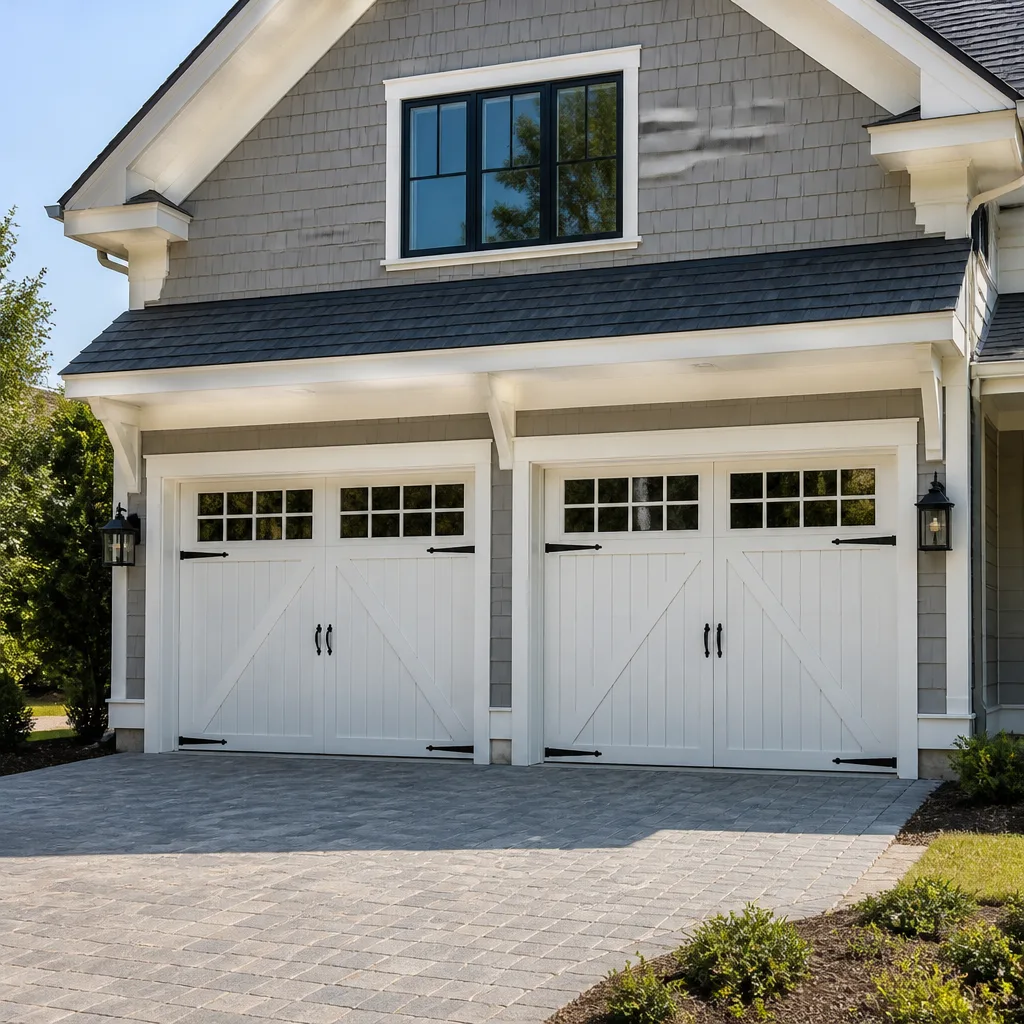 Carriage house
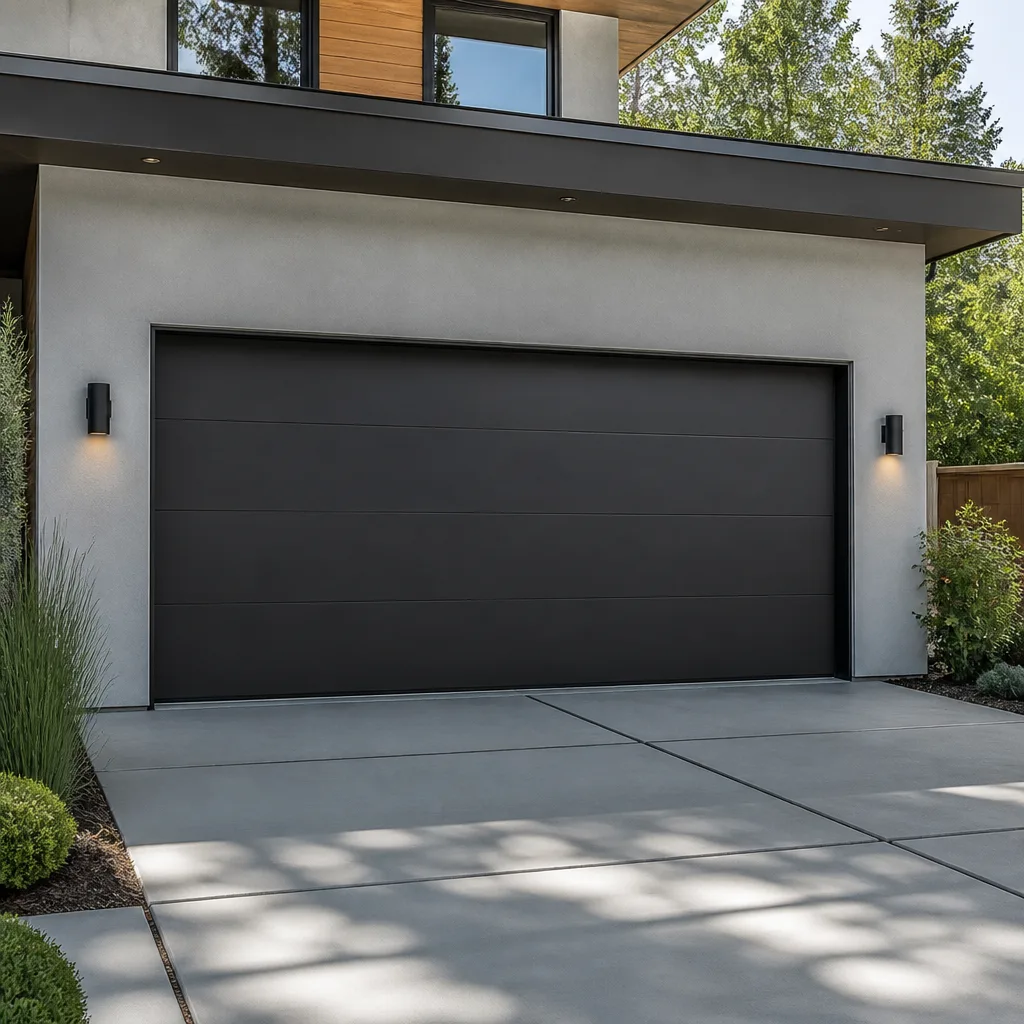 Modern flush
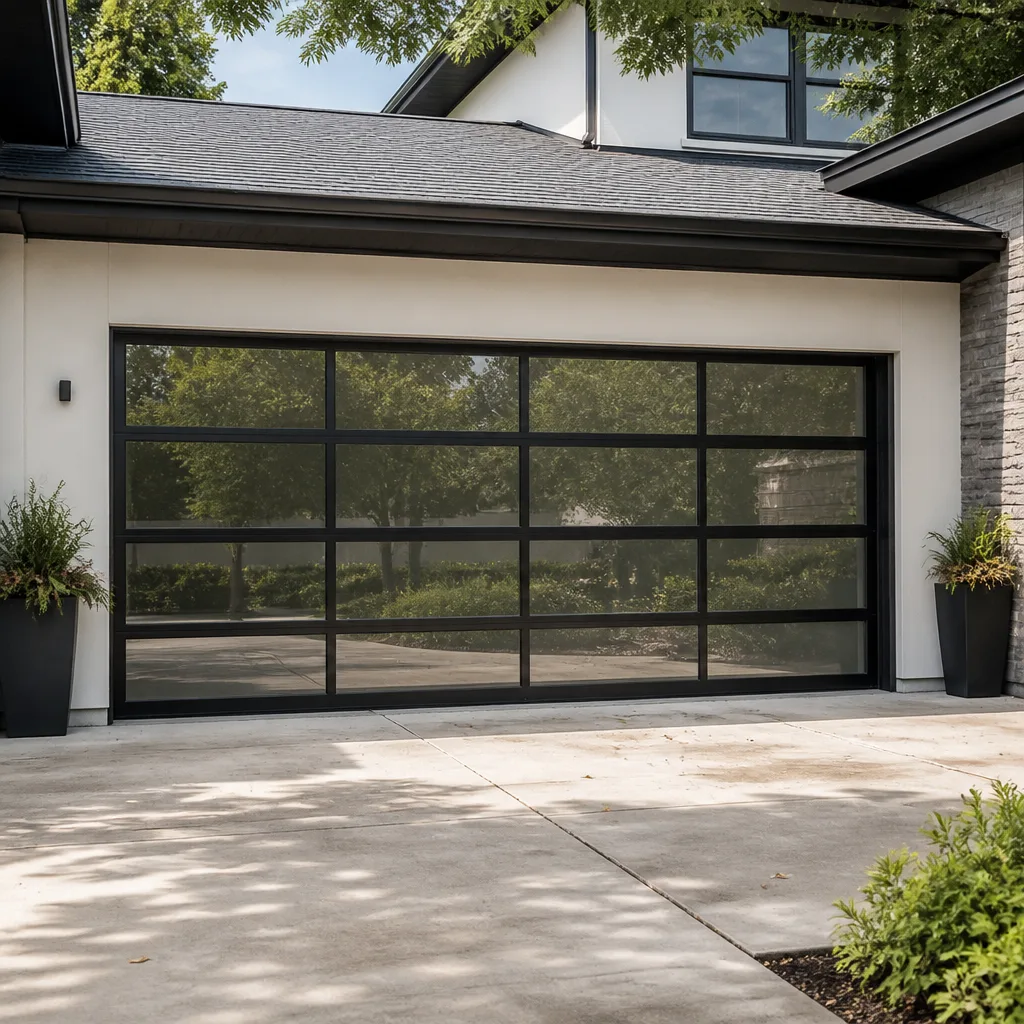 Full-view glass
 LiftMaster openers
 Chamberlain openers
Full 25-point door and opener safety check with every visit - springs, cables, rollers, tracks, and your LiftMaster or Chamberlain opener included
You get a price before we start. It does not change when the pro arrives.
Get your free estimateGarage Door Repair Troubleshooting in North Port: Common Problems and How to Fix Them
Most garage door troubleshooting advice starts in the wrong place. It hands you a checklist of adjustments before it tells you whether you should be touching the door at all. That’s a problem, because a torsion spring holds a 200-lb door under serious tension, and the wrong move on that assembly can send the whole door slamming down in under a second. Before you pick up a screwdriver, you need to know which of four categories your failure belongs to: spring, cable, opener, or track and hardware. This guide walks through that triage for North Port homeowners, covers the safe tests you can run from the ground, and flags the exact symptoms that mean stop and call. The goal isn’t to turn you into a technician. It’s to help you diagnose accurately so you don’t waste a weekend or hurt yourself on a job that was never a DIY job.
Quick Answer
Garage door troubleshooting starts with categorizing the symptom before attempting any fix. If the door won’t lift and you hear a loud bang, it’s almost always a broken torsion spring, and that’s a stop-and-call situation. If the door runs but the opener light blinks a fault code, it’s an opener problem you can often identify from the ground. If the door binds, scrapes, or drifts off its line, you’re looking at track and hardware issues. Springs and cables always require a trained technician; openers and visible hardware are the only categories where a careful homeowner has any safe room to investigate.
Styles & brands we work with
- Raised-panel steel
- Carriage house
- Modern flush
- Full-view glass
- LiftMaster openers
- Chamberlain openers
Table of Contents
- The Four Failure Categories That Decide Everything
- Three Safe Tests You Can Run From the Ground
- Spring and Cable Problems: Why These Stop the DIY Attempt
- Opener Problems: Reading Fault Codes on LiftMaster, Chamberlain and Genie
- Track and Hardware Problems: What Humidity Does to a North Port Door
- North Port Conditions That Cause False Diagnoses
- Hard Stop Signs: When to Call Immediately
- What Garage Door Repair Typically Costs in North Port
The Four Failure Categories That Decide Everything
Every garage door failure lands in one of four buckets. Sorting your symptom into the right bucket is the single most useful thing you can do before anything else, because the bucket determines whether the fix is a five-minute adjustment or a professional call. Here’s how each one presents.
- Spring: A loud bang from the garage, a door that suddenly feels extremely heavy, or a door that opens a few inches and stops. The torsion spring above the door has likely snapped.
- Cable: A visibly loose or dangling steel cable, a door that hangs crooked, or a drum that has come unwound. Cables carry the same tension as springs and are just as dangerous.
- Opener: The motor runs but the door doesn’t move, the door reverses immediately, the wall button works but the remote doesn’t, or the unit’s light flashes a repeating pattern.
- Track and hardware: Grinding, scraping, a door that jumps the track, bent rollers, loose hinges, or a door that closes crooked and leaves a gap.
The reason this matters in North Port is that the same symptom can have different causes depending on the door. A door that binds halfway up in a newer home in the West Villages area may be a track alignment issue. The same symptom on an older door near the Warm Mineral Springs side of town is more often a roller or hinge problem, or a wooden track that has swelled. Same complaint, different category, different fix. Get the category right first, then decide who touches it.
Three Safe Tests You Can Run From the Ground
You can learn a lot about a garage door without climbing a ladder or putting your hands anywhere near the springs. These three tests are safe for any homeowner to run and will tell you most of what a technician needs to know before arriving. Do them in order.
- The manual disconnect test. Pull the red release handle hanging from the opener carriage. This disconnects the door from the motor. Then lift the door by hand about halfway and let go. A properly balanced door should stay roughly where you left it. If it drops fast, the springs are shot. If it’s so heavy you can barely lift it, same answer. This test is done with your hands on the door panel only, never near the springs or cables.
- The balance check. Once the door is disconnected, raise it to waist height and step back. It shouldn’t drift more than a few inches on its own. Drifting up or down means the spring tension is off or one spring has failed on a two-spring setup.
- The visual cable inspection. From ground level with the door closed, look at both sides of the door along the vertical tracks. The cables should run straight and taut from the bottom bracket up to the drum. A cable that’s hanging slack, frayed, or wrapped unevenly around the drum is a stop sign. So is a bottom bracket that’s pulled away from the door. Don’t touch either. Note what you see.
If all three tests come back clean but the door still misbehaves, you’re likely in opener or track territory, which we cover below. If any test fails, stop here and read the hard stop signs section before doing anything else.
Spring and Cable Problems: Why These Stop the DIY Attempt
A torsion spring stores enough energy to hurt you badly, and a broken one has already released that energy once. This is not a component to experiment with. The springs, the cables, the drums and the bottom brackets all sit under the same load, and the assemblies that hold that load are exactly where YouTube tutorials tend to wave a “just be careful” hand. We don’t. A snapped spring means a professional call, every time.
Symptoms that mean you’re in the spring or cable category:
- A sharp, loud bang from the garage, often mistaken for something falling over.
- The door opens six to twelve inches and stops dead.
- The door feels like dead weight when you try to lift it by hand.
- A visible gap in the coiled spring above the door.
- A cable that has jumped off the drum or is hanging loose down one side.
- The door sits visibly crooked in the opening, one side higher than the other.
Spring replacement is one of the most technically demanding jobs on any garage door, which is why we treat it as a specialty rather than a routine repair. It requires the correct winding bars, a measured winding count, and knowledge of whether the door uses a single spring or a matched pair. A pair is almost always replaced together because two springs of the same age will fail close together, and replacing one leaves you doing the job again sooner than you’d like. If you live in North Port and your door has just gone heavy, the safest next step is to leave it down, keep the car outside, and call for garage door spring repair rather than trying to lift the door back into service. Forcing a door with a broken spring can bend the tracks and turn a spring job into a much larger repair.
Opener Problems: Reading Fault Codes on LiftMaster, Chamberlain and Genie
Openers are the one category where a homeowner can safely do real diagnosis, because the unit tells you what’s wrong if you know how to read it. The catch is that a blinking light means different things on different brands. A Chamberlain opener blinking four times is not reporting the same fault as a LiftMaster flashing the same four blinks, even though the two brands share a lot of underlying engineering. The pattern count and the color sequence matter, and guessing wrong sends you chasing the wrong part.
Common opener symptoms and what they usually point to:
- Motor runs, door doesn’t move: often a stripped gear or a broken drive belt or chain, or the manual release is still engaged from an earlier power outage.
- Door reverses immediately after touching the floor: usually the safety sensors, a misaligned photo-eye, or a travel limit set too far.
- Wall button works, remotes don’t: a remote programming or battery issue, or a radio receiver fault in the unit.
- Light flashes a repeating pattern: a stored fault code. Count the flashes and the pauses, then match them to your brand’s manual.
- Door stops partway and reverses: often a force-limit setting that needs adjusting, sometimes a binding door the opener is protecting itself from.
Smart openers add a layer. A LiftMaster or Chamberlain unit connected to a home app can log the fault and show you a status that a plain wall button never would. If your opener is on a connected platform, check the app before you do anything physical. It often tells you exactly which sensor or limit is tripping. When the fault turns out to be mechanical rather than electronic, that’s when garage door opener repair makes more sense than further poking, especially on a Genie or older Craftsman unit where parts have to match the exact model.
Track and Hardware Problems: What Humidity Does to a North Port Door
Track and hardware problems are the most misdiagnosed category in this climate. North Port’s summer humidity is heavy and persistent, and it works on garage doors in ways that dry-climate troubleshooting guides never mention. Wooden track components swell and warp. Steel tracks develop surface rust at the joints. Hinges stiffen. Rollers flatten on one side. None of that is a broken spring, but it produces symptoms that look like one, and homeowners sometimes replace perfectly good springs chasing a bind that was really a warped track.
Signs you’re in the track and hardware category:
- The door scrapes or grinds at a specific height every time.
- The door jumps or pops as it travels, rather than moving smoothly.
- A visible bend or kink in one of the vertical or horizontal tracks.
- Rollers that wobble, squeal, or have flat spots.
- Loose hinges, or a door that rattles more than it used to.
- A door that closes crooked and leaves a visible gap on one side.
Straightening a track is sometimes a real fix, and sometimes it’s a temporary patch on a track that’s already out of true. In our experience, a track that has bent once tends to bend again unless the underlying cause, usually a door that’s been running out of balance for a while, is corrected. Loose hinges and worn rollers are the easier end of this category and are worth fixing early, because a small hardware problem left alone eventually grinds the door out of alignment and pulls the whole assembly into a bigger job. If your door binds, scrapes, or sits crooked, this is squarely garage door repair territory, and it’s usually a straightforward diagnosis once someone is standing in front of the door.
North Port Conditions That Cause False Diagnoses
Half of the troubleshooting errors we see in North Port come from reading a local condition as a mechanical failure. The door is behaving within the range of normal for this climate, but the symptom points at a part that doesn’t need replacing. Here’s what to watch for.
- Humidity and wooden components. Wooden track sections and wooden door frames swell in the wet season. A door that sticks in July and frees up in the dry months isn’t broken. It’s reacting to moisture, and the fix is sealing or replacing the affected wood, not rebuilding the mechanism.
- Thermal expansion in steel tracks. Steel tracks and door panels expand and contract with temperature swings. A door that runs slightly rougher on a hot afternoon and smooth in the morning is usually showing normal movement. A persistent bind that doesn’t change with temperature is the real problem.
- New construction settling. Homes in the newer developments around North Port often have doors hung on walls that are still settling. A track that was perfectly aligned at handover can go slightly out of true in the first few years. That’s a realignment, not a spring or opener fault, and it’s easy to misread as one.
- Pest intrusion in tracks and drums. Warm, humid garages attract insects and the occasional rodent looking for shelter. Debris packed into a track or a drum will mimic a mechanical fault and is worth cleaning out before calling a repair.
- Power quality and storm-related outages. North Port sees serious thunderstorms. A power flicker can scramble an opener’s limits or force the safety sensors out of alignment when the door was pushed during an outage. Reset the unit and re-check the sensors before assuming the opener has failed.
These are the conditions that make troubleshooting in North Port different from troubleshooting in a dry part of the country. Knowing them keeps you from replacing parts that are fine and points you at the adjustment or cleanup that actually solves the problem.
Hard Stop Signs: When to Call Immediately
Some symptoms are not troubleshooting prompts. They’re stop signs. If any of the following is true, close the guide and call, regardless of how confident you feel after watching a video.
- You hear or saw a spring break. A bang followed by a door that won’t lift means the spring is gone and the door is now held by nothing. Don’t force it.
- A cable is loose, frayed, or off the drum. Cables carry the same load as springs. A slack cable means the load is no longer controlled.
- A bottom bracket has pulled away from the door. The bottom bracket is one of the most heavily loaded points on the whole assembly. Don’t push, wiggle, or “seat” it back in place.
- The door is hanging crooked or off one track. Lift it by hand and it can come down on you or twist further out of the opening.
- Sparks, smoke, or a burning smell from the opener. Stop using it and cut power at the breaker. That’s an electrical fault, not a button problem.
- The door is stuck open and you can’t secure it. This is one of the situations where emergency garage door service exists for a real reason. A door stuck open is an open invitation to anyone walking by, and it needs to be made safe.
We treat emergency garage door service as a core offering, not an add-on, because a stuck or broken door isn’t a cosmetic issue. It’s your home’s security and often the only way in or out for the car. When the door is down and locked, you have time to schedule. When it’s stuck open or hanging, you don’t. Call us and we’ll get someone out.
What Garage Door Repair Typically Costs in North Port
Here’s the answer most guides leave out: what you’ll actually budget for the most common jobs. The numbers below are typical estimated ranges for repair work in the North Port market, not promises, and the written estimate you receive before any work starts sets the final price. Every job is quoted and agreed before we begin, so there’s no invoice surprise at the end.
| Repair | Typical estimated range | Notes |
|---|---|---|
| Torsion spring replacement (one spring) | $180 – $340 | Two-spring setups usually replace as a matched pair, so a pair runs about twice the single-spring range |
| Opener repair | $120 – $280 | Depends on the fault: sensor, limit, gear, or board |
| Track realignment or hardware repair | $100 – $250 | Rollers, hinges, track straightening, and similar |
| Cable replacement | $150 – $300 | Cables are typically replaced as a pair |
If you’ve run the safe tests and you’re in the spring or cable category, budget for the top end and call. If you’re in the opener or hardware category, the range is wider because the cause is wider. In our experience, the jobs that cost the most are the ones where a homeowner tried to force a door that had a small problem and turned it into a bent track and a broken bracket. Diagnose first, and the price usually stays where the estimate says it will. When the answer is a repair we can’t do safely on a DIY basis, we’ll tell you on the phone rather than let you spend a weekend on it.
Common Mistakes to Avoid
- Forcing a door that won’t lift. If the door feels heavy, the spring has failed. Lifting it hard bends tracks, breaks brackets, and risks injury. Stop.
- Buying a spring off the internet by eye. Torsion springs are specified by wire size, inside diameter, and length, and a matched pair must match the door’s weight and balance. A wrong spring is a hazard, not a bargain. We have up to 15 years of technician experience on this exact job, and even we measure before we order.
- Misreading a fault code across brands. Four blinks on a Chamberlain isn’t the same fault as four blinks on a LiftMaster. Look the code up for your exact model, not a generic chart. And on a Genie or a Raynor unit, don’t assume the same code applies at all.
- Cleaning the tracks with a lubricant. Grease on a track collects the sand and grit that’s everywhere in North Port and turns a track into a grinding paste. Use a dry silicone spray on rollers and hinges, and keep the track itself clean and dry.
- Blaming the opener for a bind. A door that’s hard to move by hand will trip an opener’s force limiter and reverse the door. The opener isn’t broken. The door is binding. Fix the door.
- Ignoring a small scrape until it becomes a bent track. A rattle or a scrape is the cheapest problem you’ll ever have. Left alone, it becomes a track job. Deal with it early.
- Pulling the manual release while the door is under load. The disconnect handle is safe to pull only with the door closed. Pulling it on a raised door can drop it.
See the difference
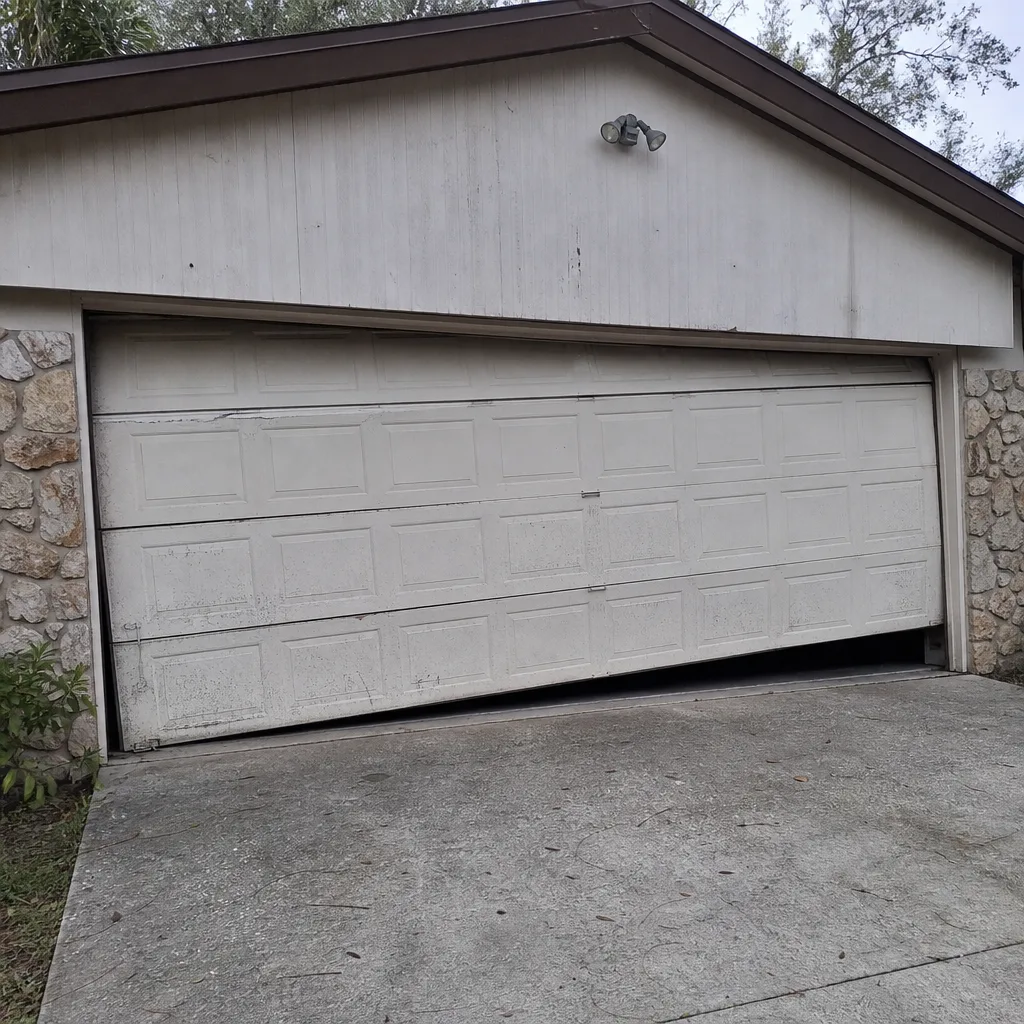 Before
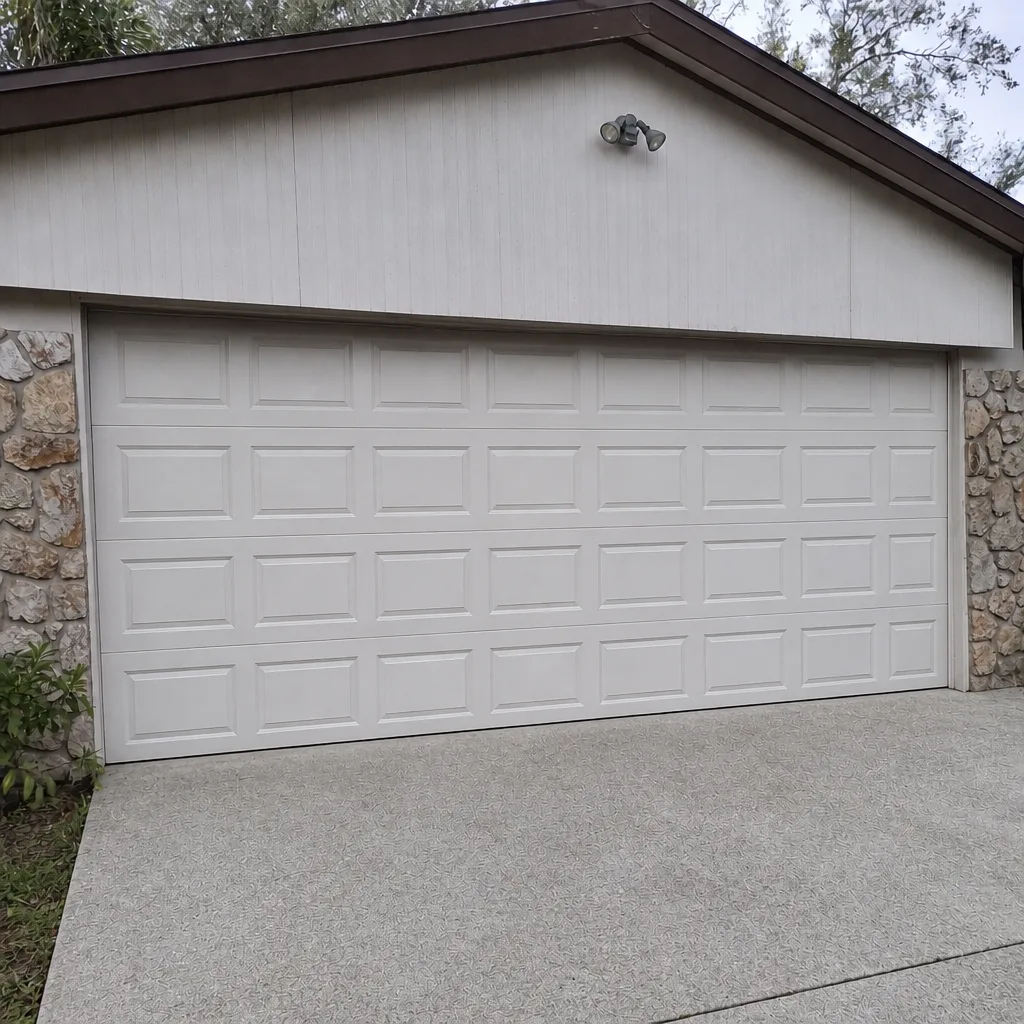 After
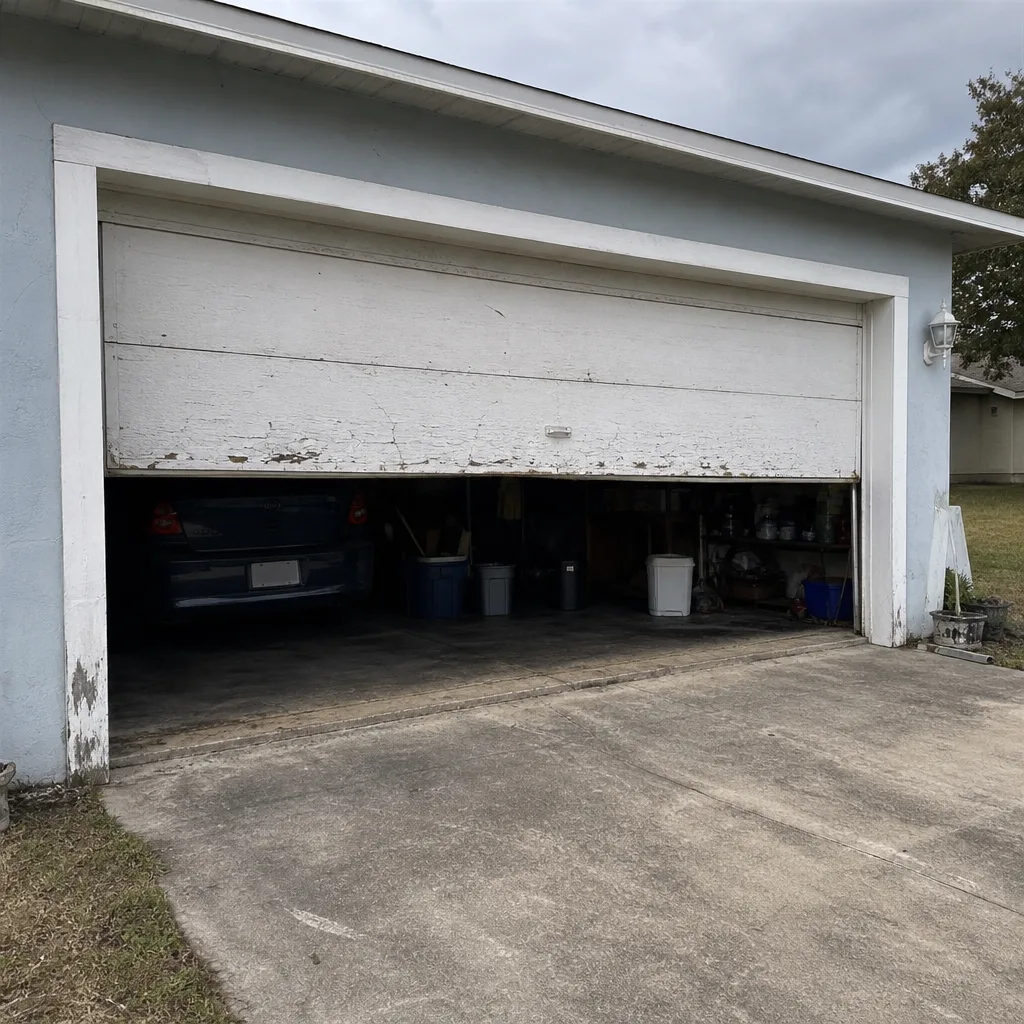 Before
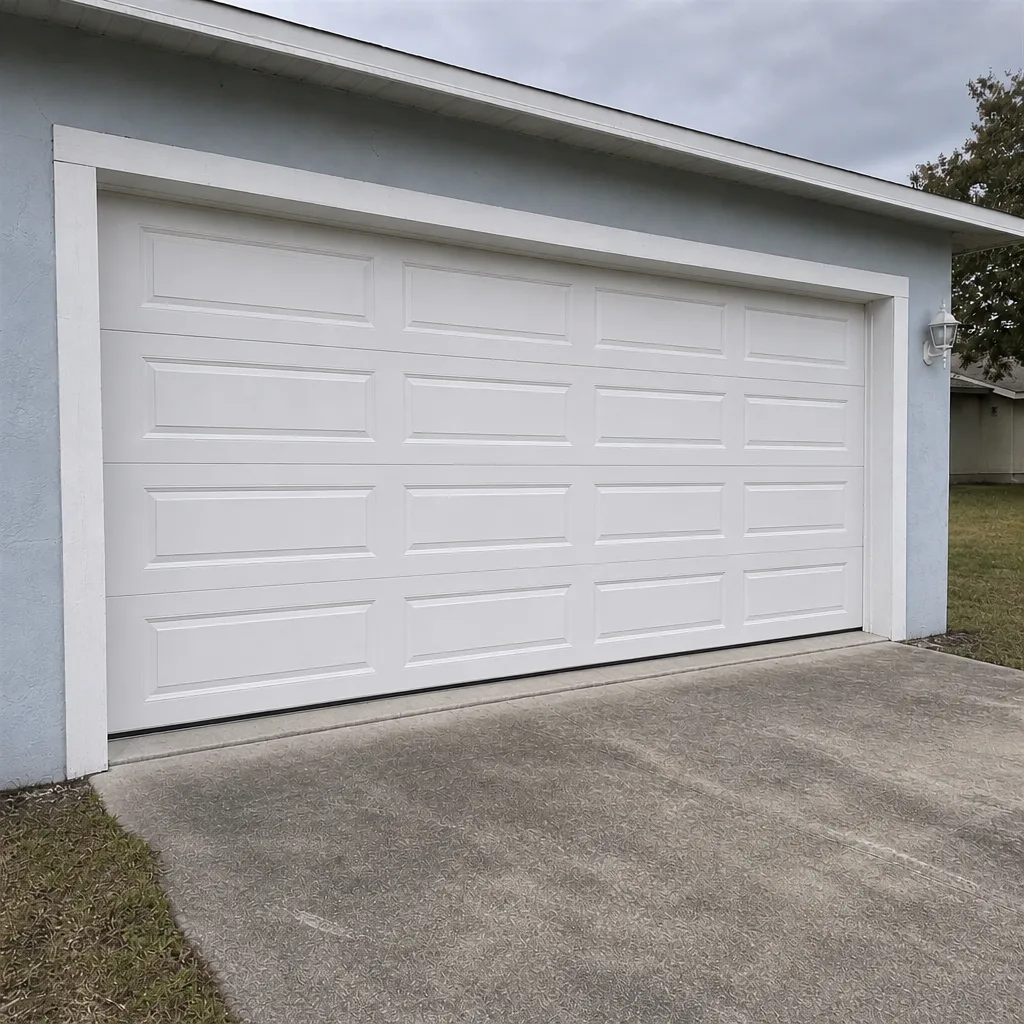 After
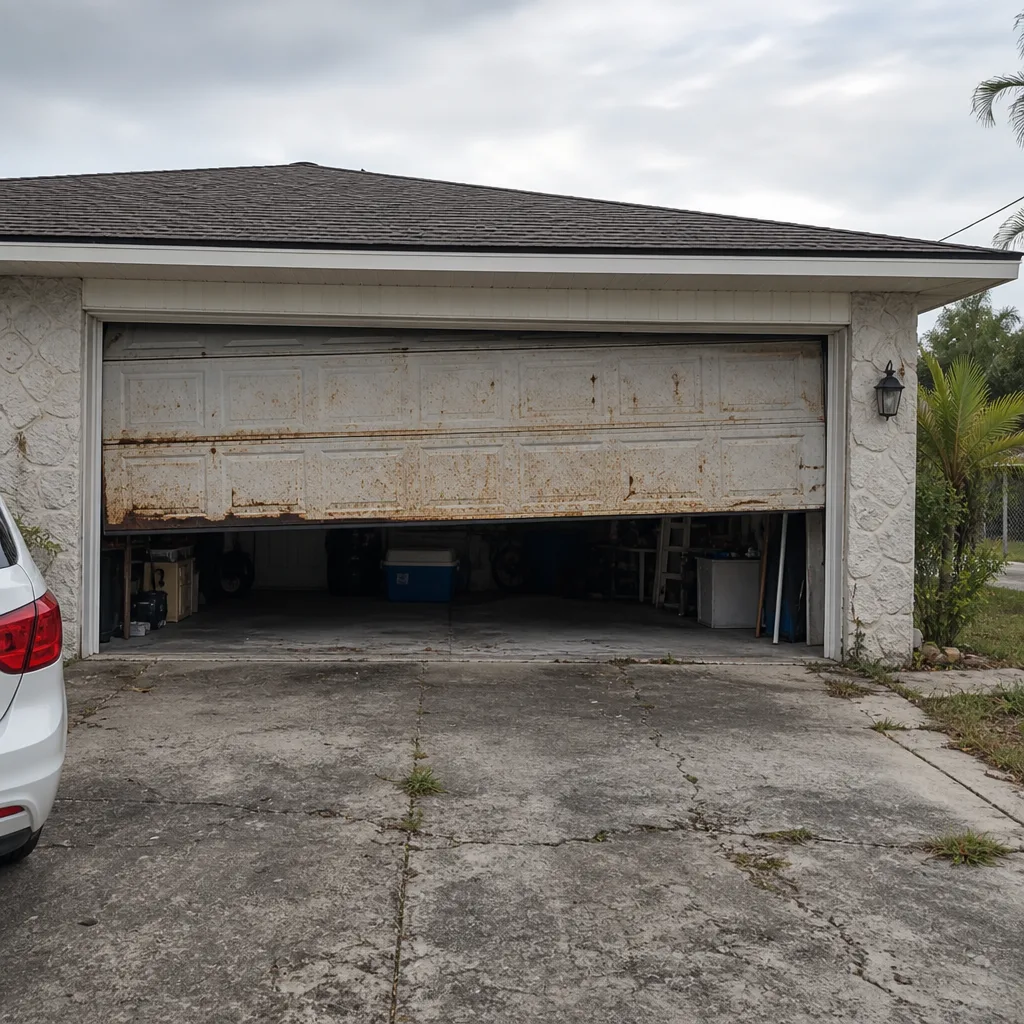 Before
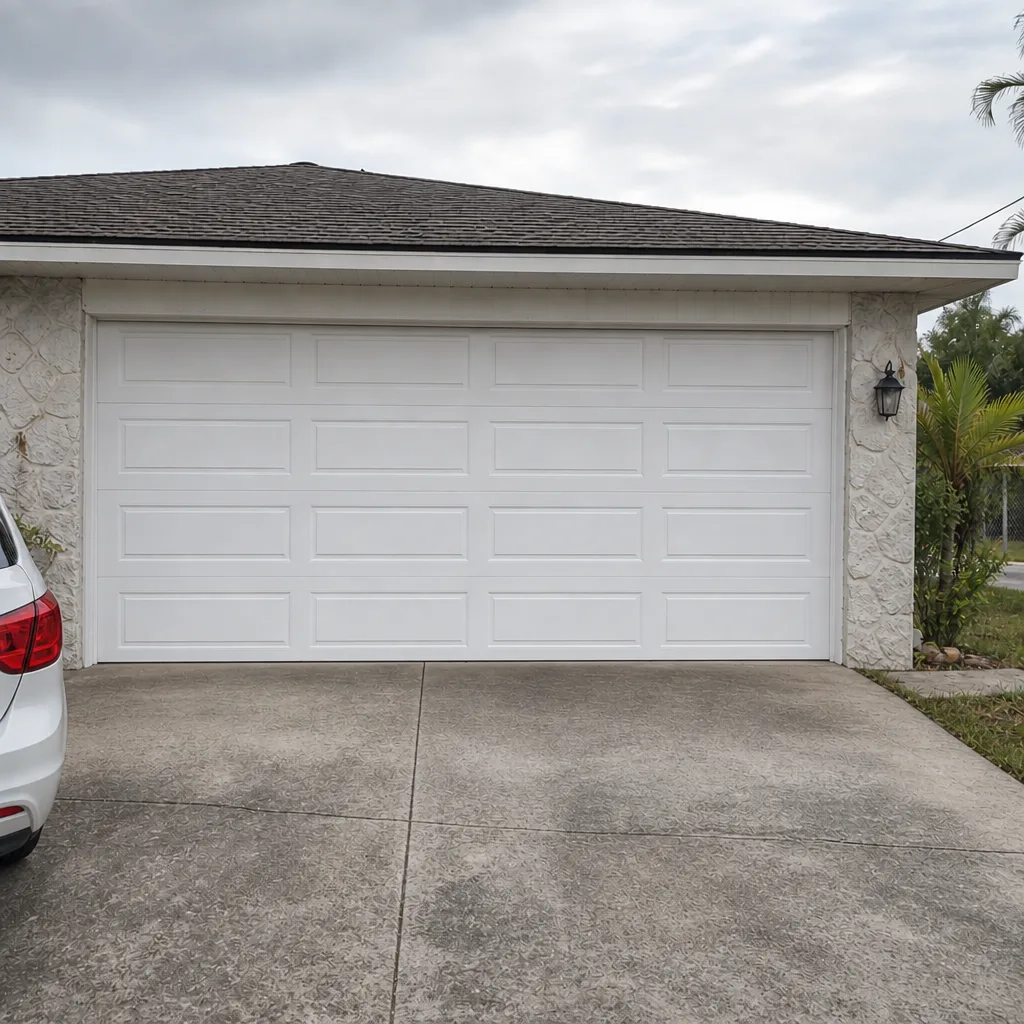 After
When to Call a Professional
Call a professional if any of these is true: a spring has broken, a cable is slack or off the drum, a bottom bracket has moved, the door is crooked or off its track, the opener is sparking or tripping the breaker, or the door is stuck open and you can’t secure it. Those are safety situations, not inconvenience situations. Beyond that, call when you’re stuck in the opener category and the fault code doesn’t resolve with a reset, or when a track problem keeps coming back after you fix it. Those are the cases where the wrong fix costs more than the right one. North Port Garage Door Repair Pros offers free estimates in North Port – call (855) 610-6385. Tell us the category your symptom falls into and we’ll know before we arrive whether it’s a quick fix or a full job.
Frequently Asked Questions
Torsion spring replacement in North Port typically runs $180 to $340 for a single spring, and a matched pair usually runs about twice that because both springs are replaced together. The written estimate sets the final price and you approve it before any work starts. Call (855) 610-6385 for an exact quote – estimates are free.
If the motor runs but the door doesn’t move, the cause is usually a broken spring, a stripped drive gear or belt, or the manual release still being engaged. Start with the release handle – if the door is easy to lift by hand, the opener is fine and the disconnect was the issue. If it’s heavy, it’s a spring, and that’s a stop-and-call. Either way, (855) 610-6385 gets you a diagnosis.
Often, yes. Tell us the brand (LiftMaster, Chamberlain, Genie, Craftsman, Raynor and the rest we service), the model number from the label under the light lens, and the exact flash pattern with pauses. That’s usually enough to narrow it to a sensor, limit, or board fault, which is a common same-day repair. Call (855) 610-6385 when you have the model number handy.
No – the price we quote is the price you pay. We inspect, measure, identify the failed part, and give you a written estimate before any work starts. You approve it or you don’t. That’s the arrangement on every job, whether it’s a sensor adjustment or a full spring replacement. Call (855) 610-6385 for a free estimate.
The local professionals we connect you with are licensed and insured as Florida requires, and they’re dedicated garage door specialists rather than general handymen. That matters most on spring and cable work, where the tools and training are specific to the trade. To book a visit, call (855) 610-6385.
If your door is stuck open and your home isn’t secure, that’s an emergency, and we offer emergency garage door service for exactly this situation. We can’t promise an arrival time from the phone, and we’re closed on Saturdays, but we work early mornings, Sundays, and standard day hours. Call (855) 610-6385 now and we’ll get you booked as the priority it is.
The Bottom Line
Troubleshooting a garage door comes down to sorting the symptom into one of four categories before you touch anything. Spring and cable problems are hard stops – heavy door, bang, slack cable, hanging bracket, all mean call, not try. Opener problems are the one zone where the unit tells you what’s wrong, if you read the fault code for your exact brand and model. Track and hardware problems are the most misdiagnosed in North Port because humidity swells wood and steel tracks shift, so a bind isn’t always what it looks like. Diagnose first, use the three safe tests, respect the stop signs, and let a specialist handle anything under tension. That’s how you fix the actual problem without creating a bigger one. If you’re not sure which category you’re in, that’s what we’re here for – reach out to North Port Garage Door Repair Pros and we’ll help you sort it.
When the diagnosis points to work you shouldn’t do yourself, call (855) 610-6385 for a free estimate. We service LiftMaster, Chamberlain, Genie, Clopay, Amarr, Wayne Dalton, Craftsman and Raynor systems in North Port, from a snapped spring to a new door and opener, and we’ll quote the work and agree it with you before anything starts.
Written by the team at North Port Garage Door Repair Pros.