Last updated November 21, 2026
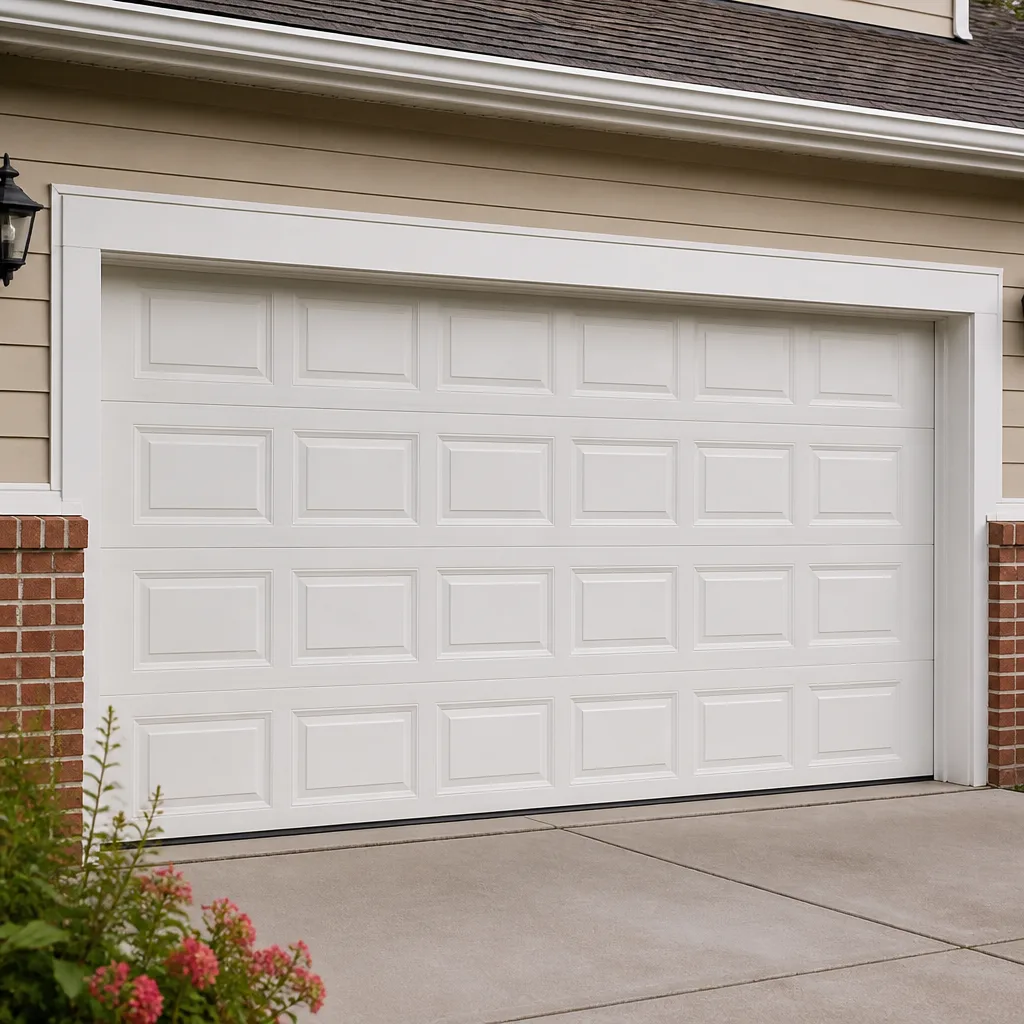 Raised-panel steel
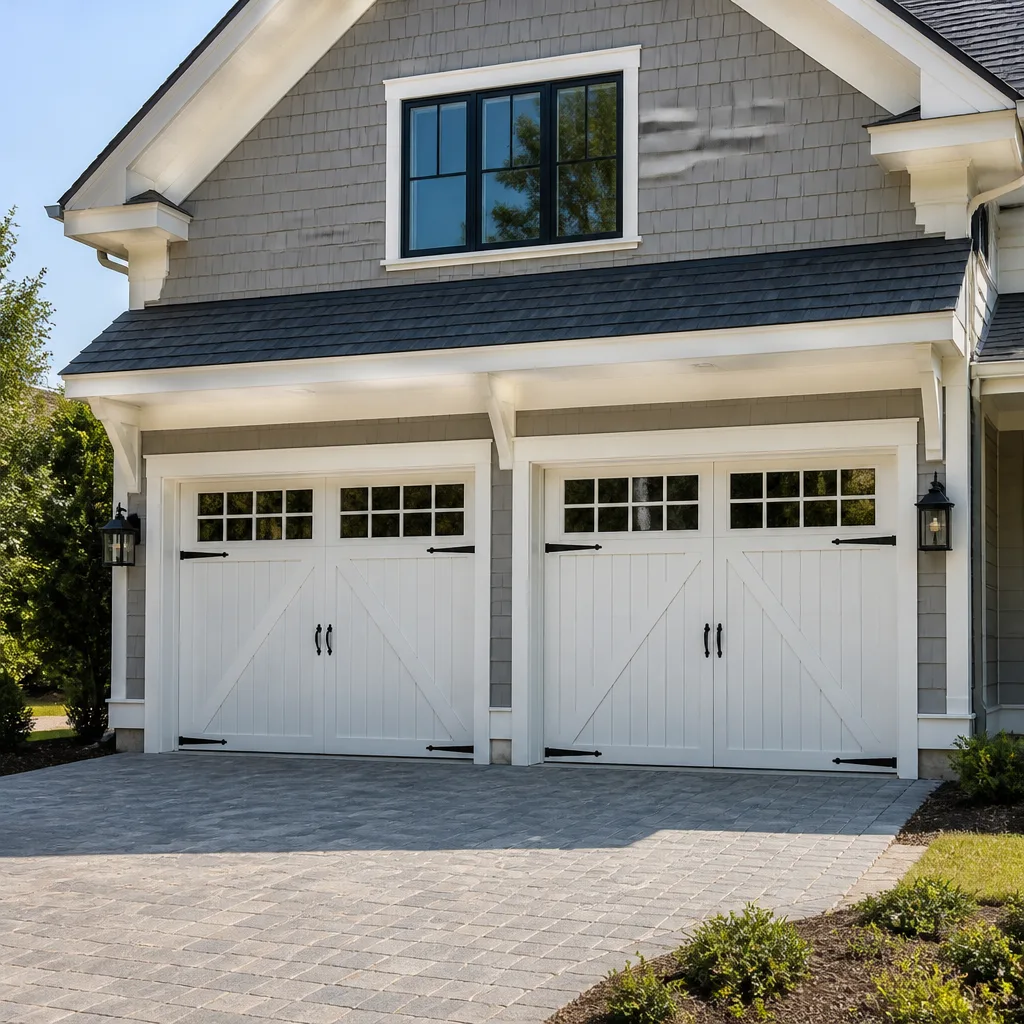 Carriage house
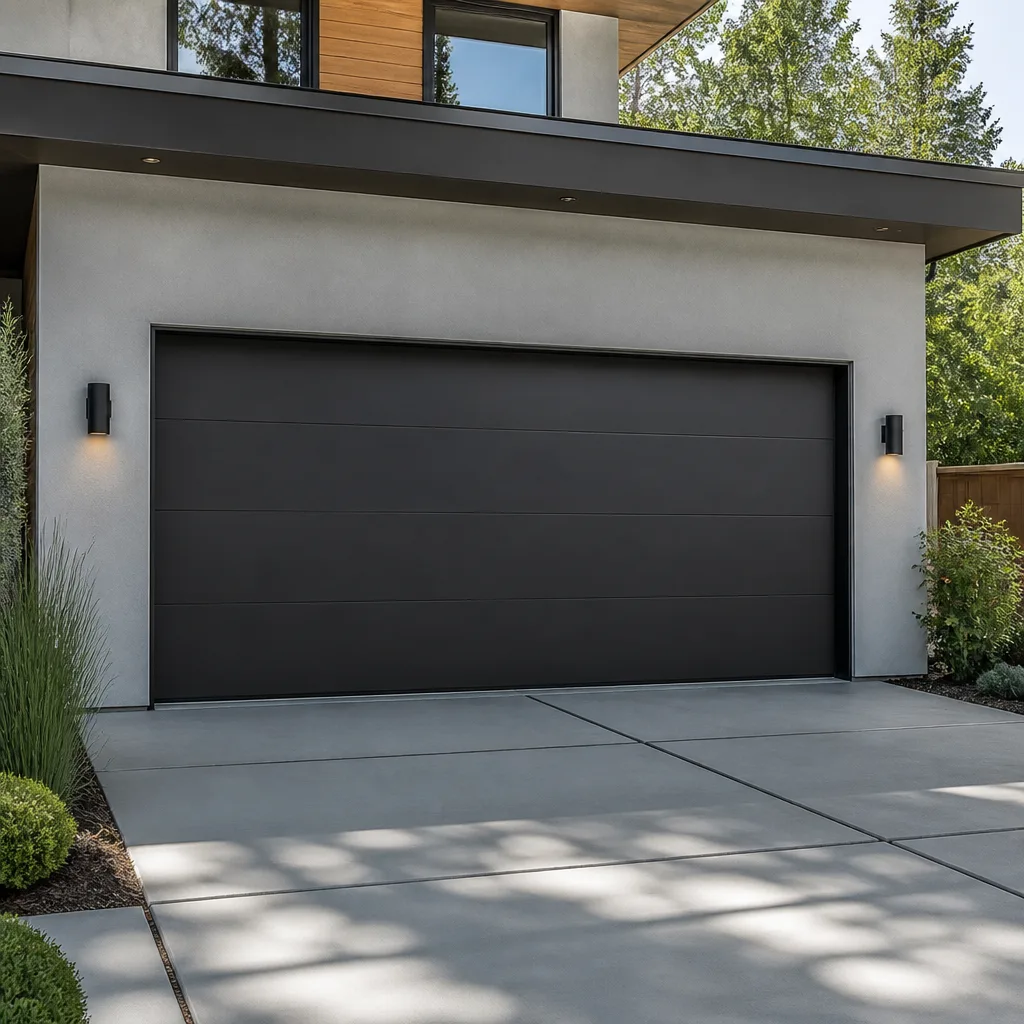 Modern flush
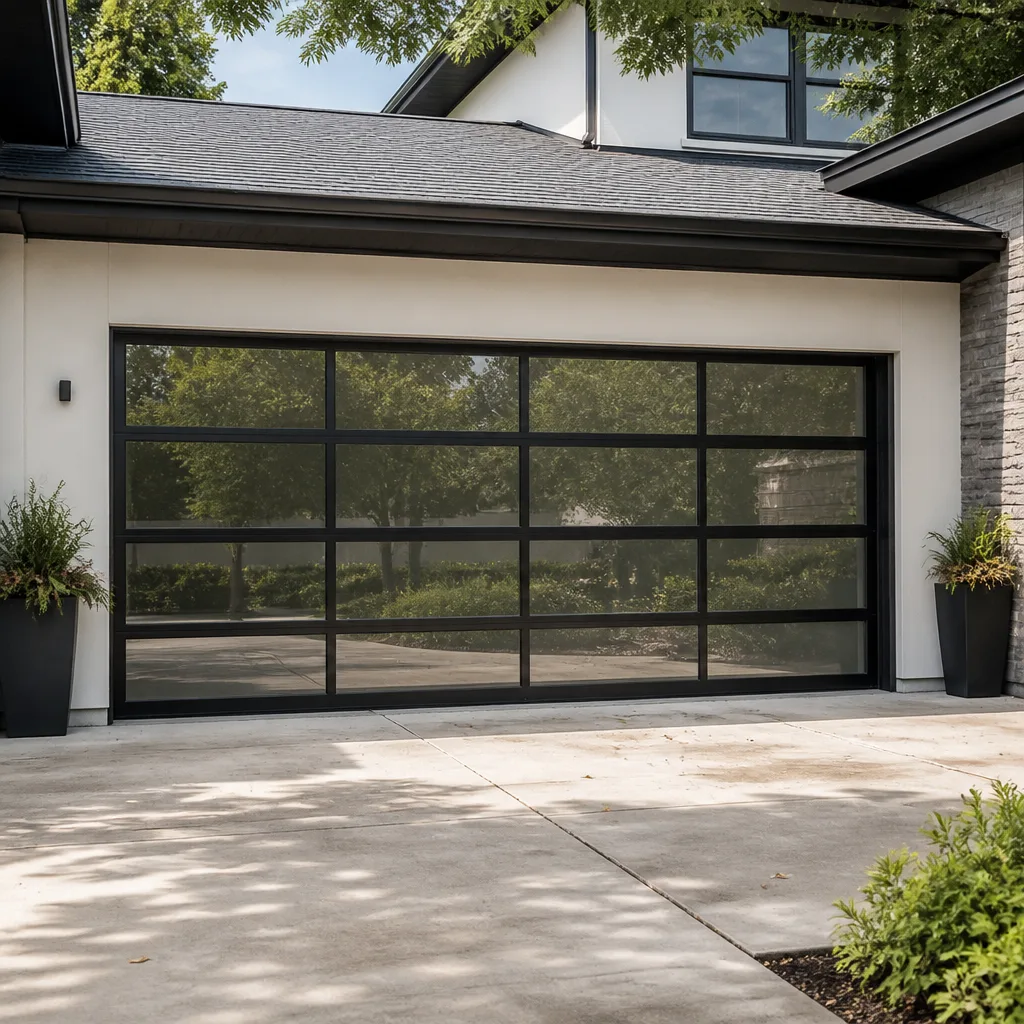 Full-view glass
 LiftMaster openers
 Chamberlain openers
Full 25-point door and opener safety check with every visit - springs, cables, rollers, tracks, and your LiftMaster or Chamberlain opener included
You get a price before we start. It does not change when the pro arrives.
Get your free estimateGarage Door Repair Maintenance Checklist for North Port Homeowners
The call we get most often in North Port isn’t about a snapped spring or a dead opener. It’s about a door that “just started acting weird” – sluggish, noisy, stopping halfway, or reversing for no clear reason. In almost every case, the door was telling the homeowner something three months earlier, and a ten-minute inspection would have caught it before the door stopped working entirely. That’s the point of this checklist. It’s built around the failures we actually see in North Port, ranked by how often they take a door completely out of service, and it’s written so you can walk it in an afternoon with no special tools.
Quick Answer
A good garage door maintenance checklist for North Port homeowners covers four things: lubrication of springs, hinges, and rollers; a balance and lift test to catch weakening springs; inspection of the bottom seal and weatherstripping for UV and humidity damage; and a visual check of tracks, cables, and hardware for wear or rust. Run it every six months, and again after any storm that pushes debris or water into the garage.
Styles & brands we work with
- Raised-panel steel
- Carriage house
- Modern flush
- Full-view glass
- LiftMaster openers
- Chamberlain openers
Table of Contents
- Why North Port Garage Doors Fail Differently
- Lubrication in a Humid Climate: What to Use and What to Skip
- The Lift Test: Checking Balance and Spring Tension Without Tools
- Bottom Seals and Weatherstripping: The Florida Replacement Cadence
- Hinges, Rollers, and Tracks: Reading the Wear Patterns
- Opener Checks: Force Settings, Safety Reverse, and Smart Platforms
- A Two-Season Maintenance Schedule for North Port
- What You Should Never Touch Yourself
Why North Port Garage Doors Fail Differently
Most maintenance checklists you’ll find online were written for a climate with hard winters and dry summers. They lead with freeze-thaw damage, ice dams, and snow load on the door panels. None of that applies here. What does apply is year-round humidity, intense UV, and a lifestyle where the garage door cycles far more often than it does in colder parts of the country.
In North Port, the garage is often a second living space. It’s where projects happen, where the bikes and kayaks live, and where people come and go to the yard, the workshop, or the car multiple times a day. That adds up. A door that cycles eight to ten times daily wears its rollers and hinges noticeably faster than one that opens twice. We see this pattern across neighborhoods from Warm Mineral Springs to the homes off Toledo Blade Boulevard, and it changes what “normal wear” looks like.
The other local factor is moisture. Humidity in the air, combined with water that gets tracked or blown into the garage, accelerates corrosion on the parts that are hardest to see from the ground: the bottom hinges, the roller stems, the bottom section’s steel edges, and the spring coils themselves. A torsion spring can look perfectly sound from six feet away and still carry a layer of surface oxidation underneath the coil. That’s why the checklist below asks you to get low and look, not just stand back and glance.
What you’ll learn here: the four failure modes that most often take a North Port door out of service, how to check for each one without tools, and the exact points where the job stops being a homeowner task and becomes a professional one. If at any point you’d rather have a trained eye on it, our North Port Garage Door Repair Pros team can walk the whole system with you and give you a written assessment.
Lubrication in a Humid Climate: What to Use and What to Skip
Use a silicone-based or lithium-based garage door lubricant on springs, hinges, rollers, and the bearing plates, and never use WD-40 as a door lubricant. WD-40 is a solvent and water displacer, not a lasting lubricant. In a humid climate it can actually strip the existing grease out of a hinge or roller bearing and leave the metal drier than it started. It’s a common mistake and an easy one to fix.
Here’s the sequence we recommend, done once every six months:
- Start with the springs. Torsion springs, mounted on the shaft above the door, need a light, even coat. Extension springs, if your door uses them, need the same treatment along the coil. Wipe off grit first so you’re not pushing dirt into the coil.
- Move to the hinges. A drop of lubricant at each hinge pivot point, top to bottom. Pay attention to the bottom hinge, which takes the most moisture exposure in a North Port garage.
- Lubricate the rollers. A small amount at each roller stem and at the bearing, not on the roller face itself. Excess lubricant on the roller face collects dust and turns into a paste.
- Grease the bearing plates. The plates that hold the torsion shaft at each end of the door need a small amount of grease at the bearing.
- Wipe away drips. Excess lubricant that runs down the door panel attracts dust and leaves streaks.
What to skip: heavy grease on plastic rollers (it degrades some nylon formulations), anything with a spray-on “penetrating” label on the springs, and any product that promises to “restore” a worn hinge or roller. A worn part is a replacement, not a lubrication problem. If you’re hearing grinding from a roller or a hinge, lubrication will quiet it for a while but won’t fix the underlying wear.
One more local note: because North Port garages are often used as workspaces, sawdust, sanding dust, and yard debris collect on the door hardware faster than in a garage that only stores cars. Wipe the springs and hinges down before you lubricate, or you’ll trap grit where you want smooth metal.
The Lift Test: Checking Balance and Spring Tension Without Tools
To test a garage door’s balance, disconnect the opener and lift the door by hand to about waist height. A properly balanced door should stay roughly where you let go, maybe drifting slightly. If it sinks fast, the springs are losing tension. If it rises on its own, they’re over-tensioned or the door is misbalanced. Do not reach up to adjust anything on the spring itself; the test is a check, not a repair.
Run the lift test twice a year, in spring and in fall, and again after any stretch of unusually hot weather. Heat cycling affects spring tension more than most homeowners expect, and a door that balanced fine in March can feel noticeably heavier by August.
Here’s the full procedure:
- Close the door and pull the emergency release cord to disconnect the opener. On most LiftMaster and Chamberlain openers, the release is a red handle hanging from the trolley.
- Lift the door by hand to about waist height. Use the bottom section or the lift handle, not the hinge points.
- Let go gently and watch. The door should hold within a few inches. Note whether it sinks, rises, or stays.
- Lower the door carefully and re-engage the opener by pulling the release cord back until the trolley clicks in. Run the opener once to confirm it reconnected.
- Write down what happened. A door that needs a firm push to start moving, or that sinks more than a foot before stopping, is telling you the springs are past their useful life.
What you’re really checking for: a spring that’s lost tension, a door that’s out of balance because a cable has slipped, or a roller that’s seized and dragging. Any of those will make the opener work harder, which shortens its life. If the lift test says the door is heavy, that’s a good time to book a professional look before the opener pays the price. Our garage door spring repair team handles the tension side of this every day, and a free estimate will tell you whether the spring needs replacing or just adjusting.
Bottom Seals and Weatherstripping: The Florida Replacement Cadence
In North Port, inspect the bottom seal every six months and expect to replace it roughly every two to three years, not once a decade as generic checklists suggest. UV exposure here breaks down the rubber faster than in most of the country, and a hardened seal stops doing its job long before it visibly falls apart.
The bottom seal is the rubber or vinyl strip that runs along the bottom of the door and contacts the floor. When it’s working, it keeps water, insects, and yard debris out of the garage. When it’s not, you get water intrusion at the door line, a visible gap under the door when it’s closed, and sometimes a whistle or draft in windy weather. In a humid climate, a failed seal also lets moist air sit against the bottom section of the door, which is where rust starts first.
How to check it, in order:
- Close the door and look for daylight under the bottom edge. Any visible gap means the seal isn’t contacting the floor evenly.
- Press the seal with your thumb. It should feel soft and springy. If it’s hard, cracked, or leaves a permanent dent, it’s done.
- Check the sides and top weatherstripping where the door meets the frame. The side strips take direct UV and degrade faster than the bottom seal in many cases.
- Look for black residue on the floor where the seal meets the concrete. That’s usually rubber breaking down, not dirt.
- Check the threshold where the door meets the floor. If the concrete has settled or cracked, the seal can’t compensate for it no matter how new it is.
Replacement is a homeowner-friendly job for the bottom seal on most doors, and a garage door technician can handle it quickly if you’d rather not. Sides and top weatherstripping are a bit more involved because they’re attached to the frame rather than the door. Either way, don’t put it off: a failed seal in North Port is a slow invitation for moisture, insects, and rust at the door’s most vulnerable section.
Hinges, Rollers, and Tracks: Reading the Wear Patterns
The wear pattern that matters most in North Port is uneven rust on the bottom two hinges and the roller stems, caused by moisture sitting at the lowest point of the door. The parts near the floor are the ones that fail first, and they’re the ones homeowners look at least often. Get down on the floor and look up at the bottom hinge with a flashlight. If you see orange-brown surface rust, pitting, or a hinge that’s stiffer than the ones above it, plan to replace it.
Rollers are the second wear point. There are two common types: steel rollers and nylon rollers. Nylon rollers run quieter and don’t rust, but they wear faster in a door that cycles often, which is typical in North Port. Steel rollers last longer but need lubrication and will rust if moisture reaches the bearings. Check each roller by turning it with your fingers with the door closed and disconnected. A roller that wobbles, grinds, or has a flat spot is a replacement.
Tracks are the third. In a North Port garage, the most common track problem isn’t impact damage, it’s misalignment from a door that’s been binding against a worn roller for months. Look down the track from the floor and check for:
- Dents or bends, especially near the bottom of the vertical track where a car or a bicycle might have bumped it.
- Gaps between the track and the door frame, which allow the track to shift.
- Debris in the track at the floor line, which is common in a garage used as a workspace.
- Rust streaks along the track, which point to moisture and predict roller bearing problems.
Track alignment is a professional job. Attempting to bend or re-seat a track by hand usually makes the problem worse, and a misaligned track can cause the door to come off the rollers entirely. Our garage door repair team adjusts tracks and replaces worn hardware as part of a standard service visit, and the visit starts with a free estimate.
Opener Checks: Force Settings, Safety Reverse, and Smart Platforms
Test the safety reverse twice a year: place a two-by-four flat on the floor under the closing door and confirm the door reverses when it contacts it. Test the photo-eye safety sensors by waving an object in front of them while the door is closing; the door should reverse immediately. These two tests are the most important opener checks you can do, and they’re the two most homeowners skip.
The reverse test matters because opener force settings drift over time. A door that’s working against a weakening spring needs more force to close, and the opener compensates until it’s pushing hard enough to be a hazard. If your door slams shut, or if it takes several attempts to close, the force setting is probably too high. Don’t just dial it down; find out why the door is binding first.
Here’s the opener checklist:
- Test the wall control and both remotes. All should operate the door smoothly. A remote that works only up close usually needs a new battery, not a new opener.
- Run the safety reverse test with a two-by-four under the door.
- Test the photo-eye sensors by blocking the beam while the door is closing.
- Listen for unusual sounds: grinding, rattling, or a hum without movement. Grinding usually points to a gear or a worn trolley. A hum without movement can indicate a stripped gear.
- Check the manual release to make sure it engages and disengages cleanly.
- For smart openers, like many current LiftMaster and Chamberlain models, check the app connection and any alerts. A “door open” notification you didn’t trigger is worth investigating.
If the opener is a Genie, Chamberlain, or older Craftsman unit and it’s been in service for many years, a professional diagnosis is worth the visit before you replace it. Sometimes the fix is a $30 gear kit and sometimes it’s a new unit, and it helps to know which before you decide. Our garage door opener repair team works on both legacy and current smart-opener platforms, and we’ll tell you which path makes sense for your door.
A Two-Season Maintenance Schedule for North Port
Run the full checklist twice a year, once in spring and once in fall, with a few lighter checks in between. That cadence fits North Port’s climate better than the annual advice you’ll find on national sites, because UV and humidity wear parts here on a faster clock than temperature swings do.
Here’s how to break it down:
- Spring inspection (full checklist): lubrication, lift test, seal inspection, hardware inspection, opener safety tests, and a visual check of the spring coils for rust or separation.
- Mid-summer spot check: bottom seal and weatherstripping only, since UV damage peaks in these months. A quick look catches a seal that’s starting to harden before it cracks.
- Fall inspection (full checklist): repeat everything from spring, with extra attention to corrosion on the bottom hinges and roller stems after a humid summer.
- After any major storm: check tracks for debris and alignment, seals for damage, and the opener for any odd behavior after a power interruption. Modern openers often need a travel-limit reset after a power event.
- Anytime the door behaves differently: a new noise, a slower open, a partial close, or a reverse that didn’t happen before. These are the signals that a small issue is starting.
Keep a simple log. Write down the date, what you checked, and what you noticed. Over a couple of years, that log tells you exactly when a part is due, and it’s useful to have when a technician visits. It also keeps you honest about whether it’s actually been six months since the last inspection.
What You Should Never Touch Yourself
Never attempt to adjust, remove, or replace a torsion spring, and never try to re-tension a cable. These components are under extreme tension, and the tools and training required to handle them safely are not homeowner equipment. A torsion spring carries enough stored energy to cause serious injury if it releases unexpectedly, which is why spring work belongs to a trained professional with the right winding bars and the right procedure.
The same caution applies to a few other areas:
- Track alignment. Bending a track by hand usually makes it worse and can cause the door to come off the rollers.
- Cable replacement. Cables are under tension and are frequently the cause of injuries when handled by untrained hands.
- Opener force settings above the manufacturer’s range. Cranking force up to make a heavy door close is a safety problem, not a fix.
- Springs on doors that have been sitting unused. A door that hasn’t moved in months can have a spring that’s partially failed without any visible sign. Have it inspected before you run the opener.
If you’re not sure whether a job is safe to do yourself, it isn’t. That’s the honest answer. Our technicians have up to 15 years of experience, and spring work is one of the parts of the trade that most clearly separates a trained specialist from a general handyman. If you’re not comfortable with any part of the checklist, stop and call.
Common Mistakes to Avoid
- Using WD-40 on the springs and hinges. It’s a solvent, not a lasting lubricant, and in a humid North Port garage it can strip existing grease and leave metal drier than before. Use a silicone or lithium-based garage door lubricant instead.
- Skipping the lift test because the door “still opens fine.” A door that opens on command can still have weakening springs that are quietly wearing out the opener. The lift test is what catches it before the opener fails.
- Waiting for the bottom seal to fall off. By the time a seal is visibly cracked or hanging, it’s been letting moisture in for months. Replace it on the two-to-three-year cadence, not when it fails.
- Cranking up the opener force to close a heavy door. This masks a spring problem and creates a safety risk. If the door is heavy, the spring needs attention, not more force.
- Ignoring rust on the bottom hinge because it “looks minor.” The bottom hinge and roller stems take the most moisture in a North Port garage and are the first parts to fail. Surface rust is the signal, not the background.
- Adjusting the springs or cables yourself. These parts are under extreme tension. This is the one part of the checklist that’s never a homeowner job, no matter how many videos you watch.
- Assuming a new noise will go away. A new rattle, grind, or squeak is the door telling you something changed. Note it and get it looked at before it turns into a door that won’t close.
See the difference
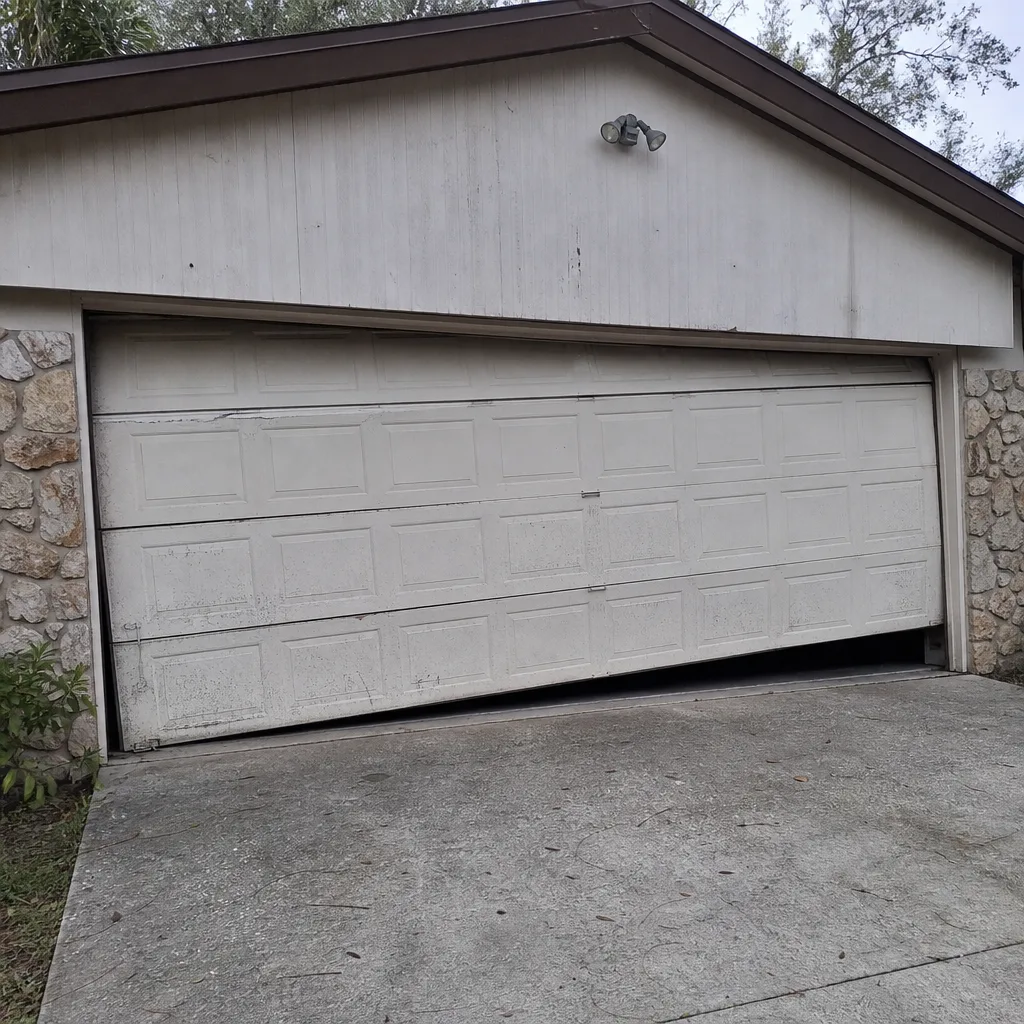 Before
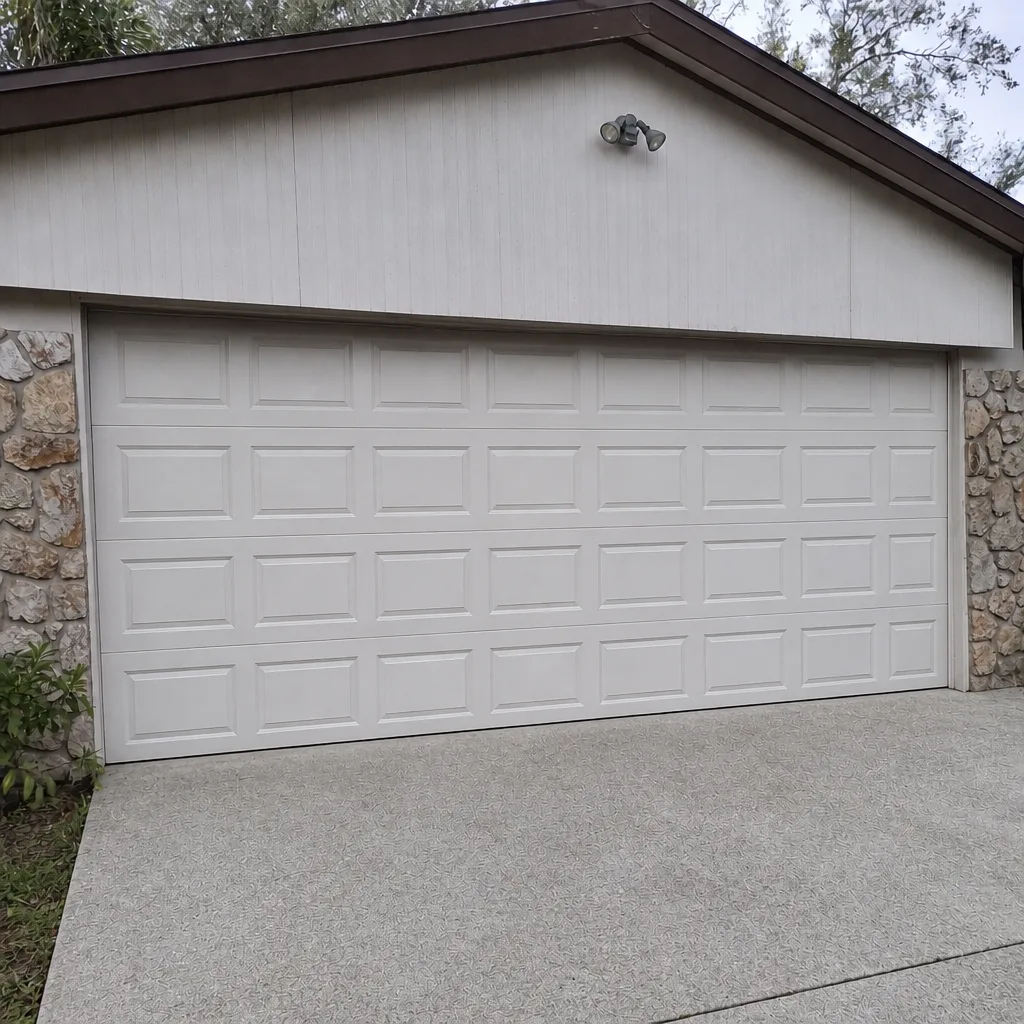 After
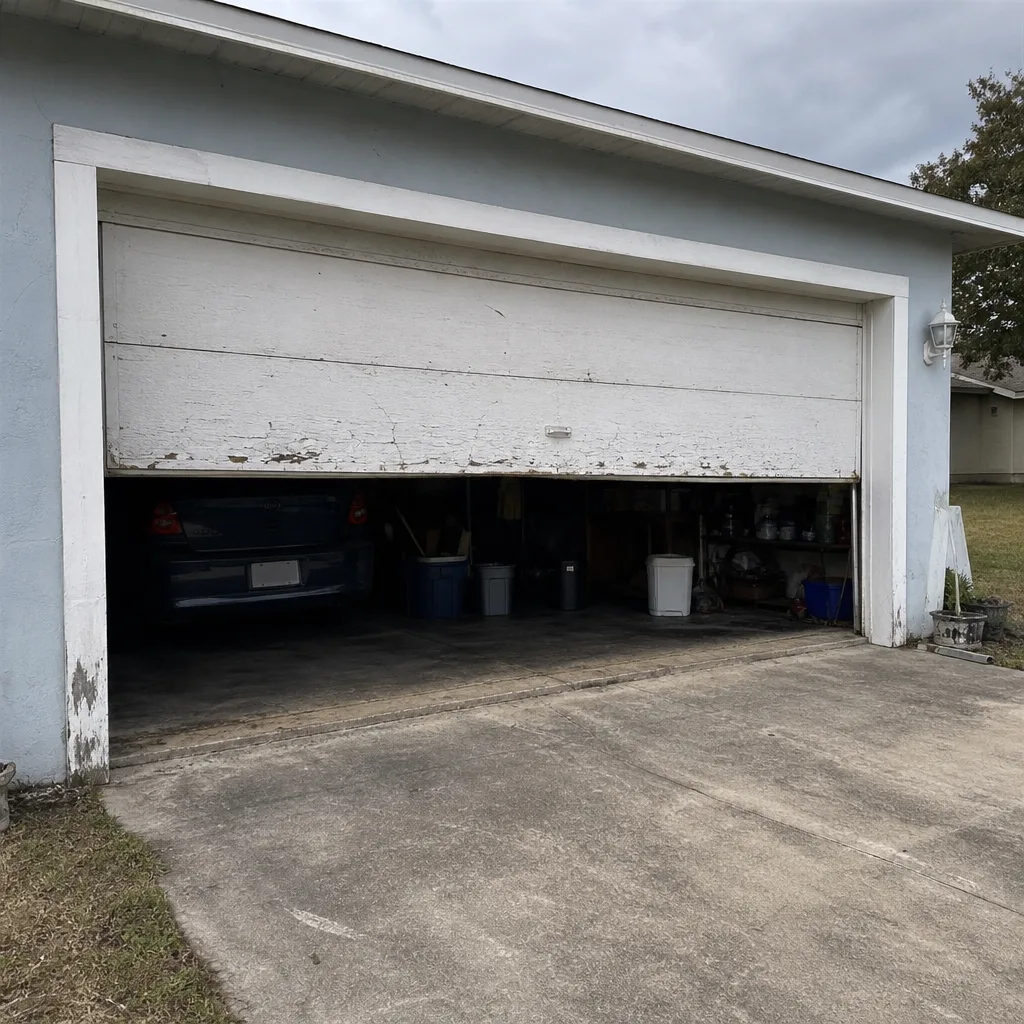 Before
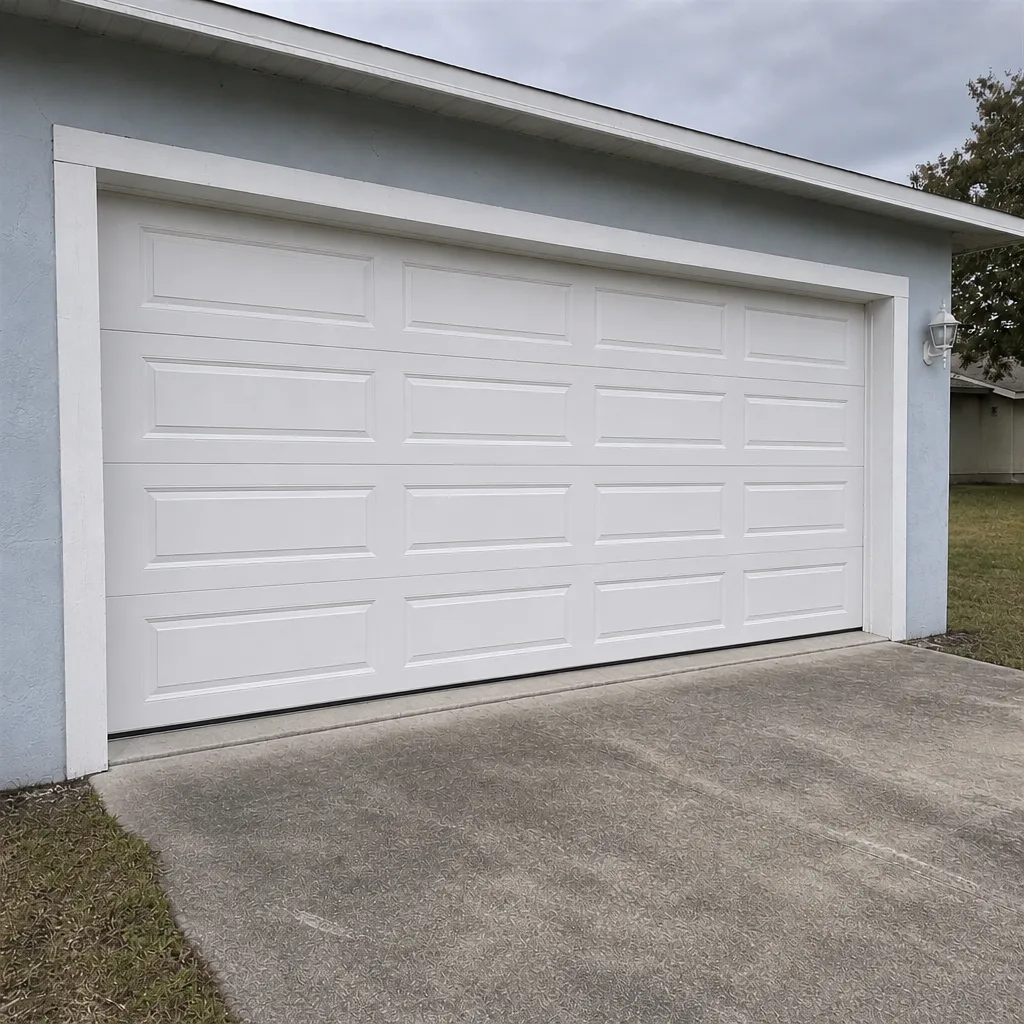 After
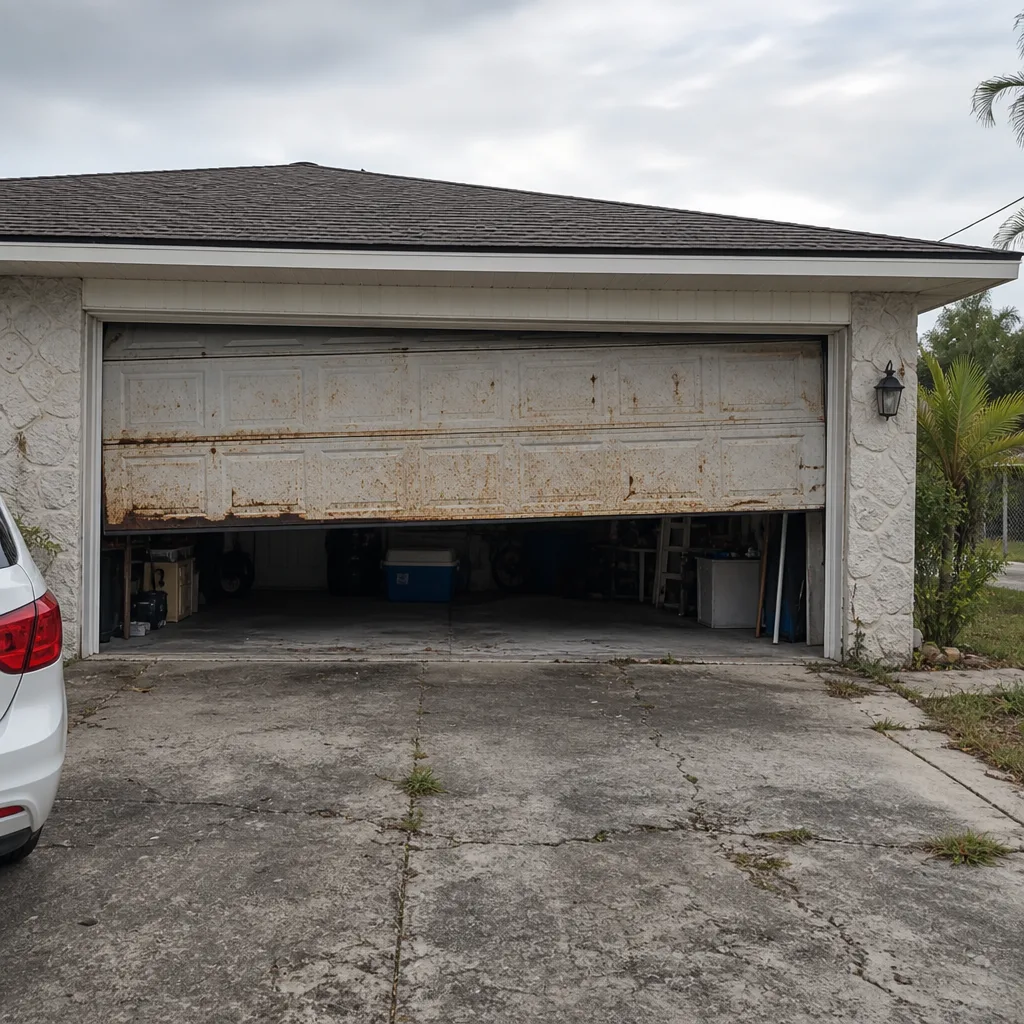 Before
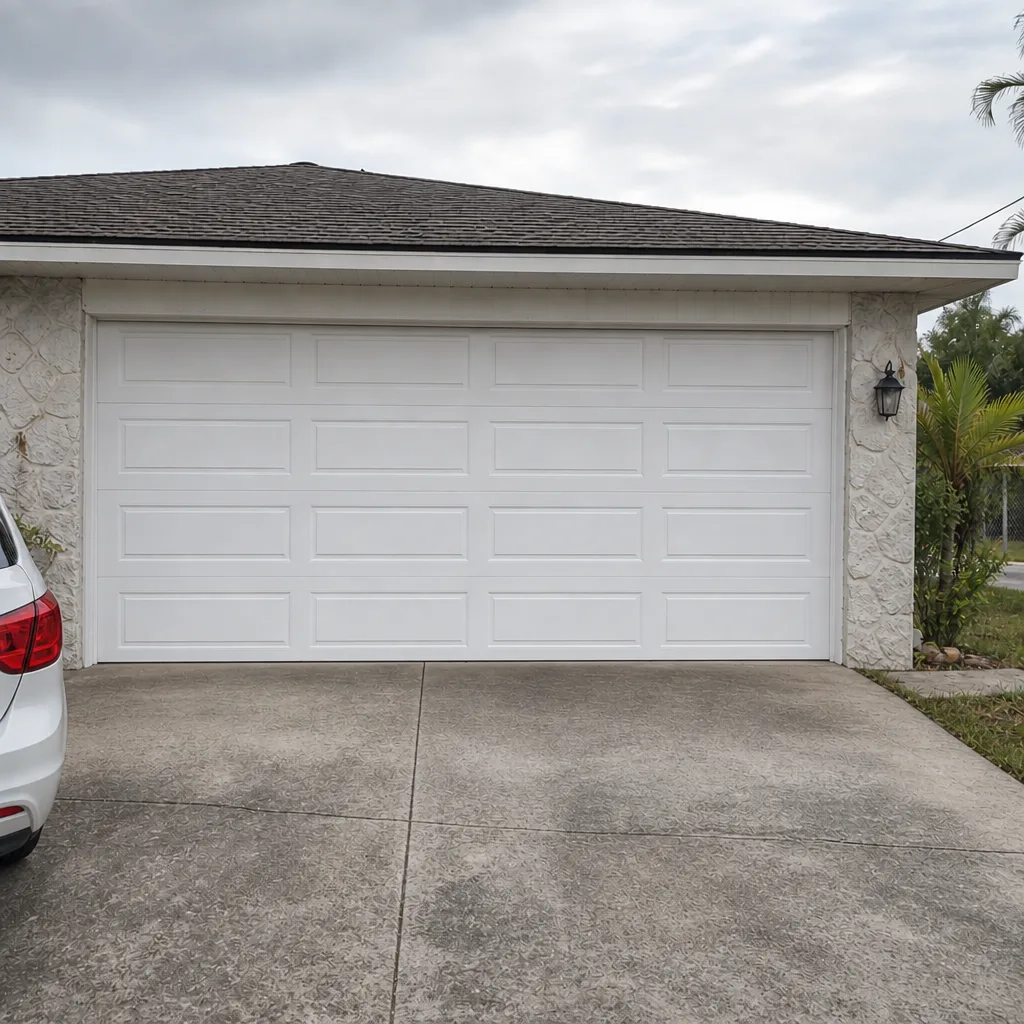 After
When to Call a Professional
Call a professional if the lift test shows the door is heavy or sinking, if you hear grinding or repeated clicking from the opener, if the door reverses without an obvious obstruction, if the door is stuck open or stuck closed, or if you see a broken spring, a frayed cable, or a bent track. Those are the situations where a small job becomes a larger one if you wait.
Spring and cable issues, track misalignment, and opener force problems are the three areas where we most often see a homeowner’s repair attempt turn into a bigger repair. If you’re not sure whether your issue qualifies, ask. A quick call is cheaper than a door that fails all at once.
North Port Garage Door Repair Pros offers free estimates in North Port – call (855) 610-6385. We’re open Sunday through Friday, 7am to 7pm, and closed Saturday. Emergency garage door service is available for situations where a stuck or broken door creates a security or safety problem, and we work on LiftMaster, Chamberlain, Genie, Clopay, Amarr, Wayne Dalton, Craftsman, and Raynor systems.
Frequently Asked Questions
Twice a year, in spring and fall, with a light mid-summer check on the bottom seal and weatherstripping. The UV and humidity in North Port wear seals and hardware faster than in drier climates, so the twice-a-year cadence catches problems before they take the door out of service. If your garage door cycles more than six or seven times a day, or if the door has been through a storm, add a check after the event.
A silicone-based or lithium-based garage door lubricant, applied to springs, hinges, rollers, and bearing plates every six months. Avoid WD-40 as a door lubricant: it’s a solvent and water displacer, and in a humid climate it can strip existing grease without replacing it. Wipe grit off the parts before you lubricate so you’re not pushing dirt into the hinges.
Yes, on most doors the bottom seal is a homeowner job: the seal slides or clips into a channel on the bottom section and doesn’t involve springs or cables. Side and top weatherstripping are also DIY-friendly but a bit more involved. If the threshold is cracked or settled, or if the seal channel is damaged, have a technician look at it. Call (855) 610-6385 for a free estimate if you’d rather have it done.
The lift test tells you: disconnect the opener, lift the door to waist height, and let go. A door that sinks noticeably or needs a firm push to move has weakening springs. Visual signs include a visible gap in the spring coil, a door that’s heavier on one side, or a loud bang followed by a door that won’t lift at all. Never try to adjust the spring yourself; call a professional.
Call when the door is stuck open (a security problem), stuck closed with a car inside, hanging off a track, or making a noise that suggests a spring or cable has failed. Those are the cases where waiting creates a bigger problem. Our emergency service line is (855) 610-6385, and we’re open Sunday through Friday, 7am to 7pm, closed Saturday.
Yes, it’s common. Heat expands metal tracks and can change spring tension enough to make a marginal door bind or a worn roller drag. If the door works in cooler weather and misbehaves in summer, it’s usually a sign that a roller, hinge, or track is already worn and the heat pushed it over the edge. That’s worth a look before the next hot stretch.
The Bottom Line
Most garage door failures in North Port start small: a stiff hinge, a hardening seal, a spring that’s lost a little tension. The four checks that matter most are lubrication every six months with the right product, the lift test twice a year, a bottom seal inspection on a two-to-three-year replacement cadence, and the opener’s safety reverse test. Those catch the majority of problems before the door stops working. Track misalignment, spring and cable work, and opener force issues belong to a trained technician, not a homeowner. If you’d like a professional to walk your door through the full checklist, North Port Garage Door Repair Pros offers free estimates in North Port.
Written by the team at North Port Garage Door Repair Pros.