Last updated November 21, 2026
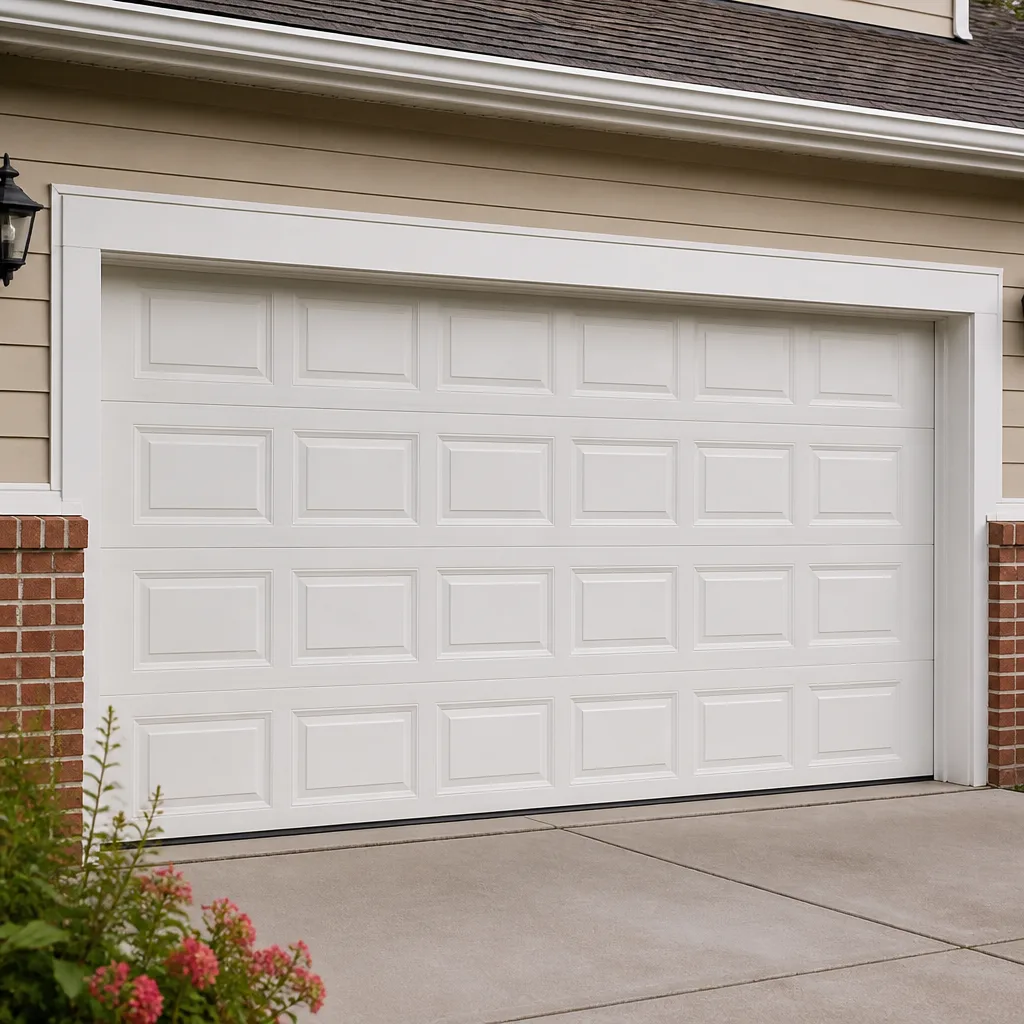 Raised-panel steel
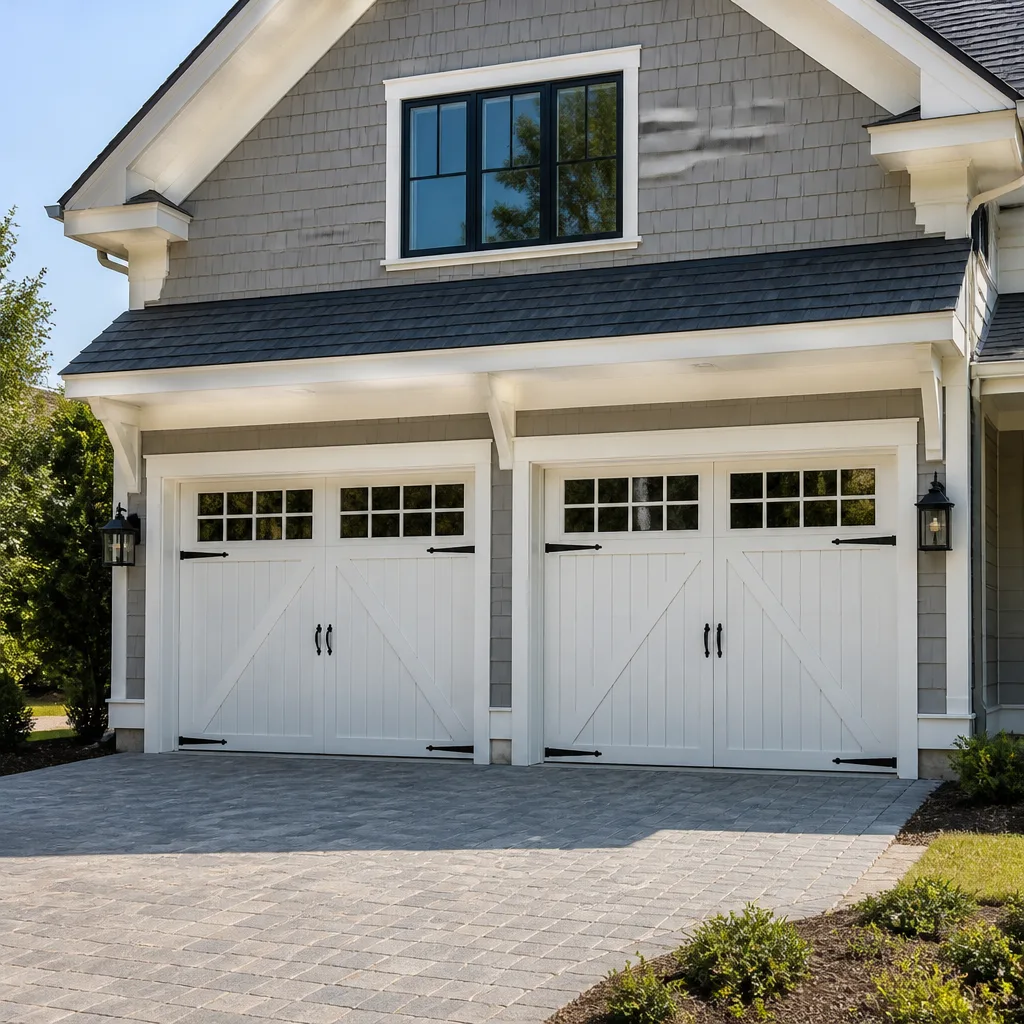 Carriage house
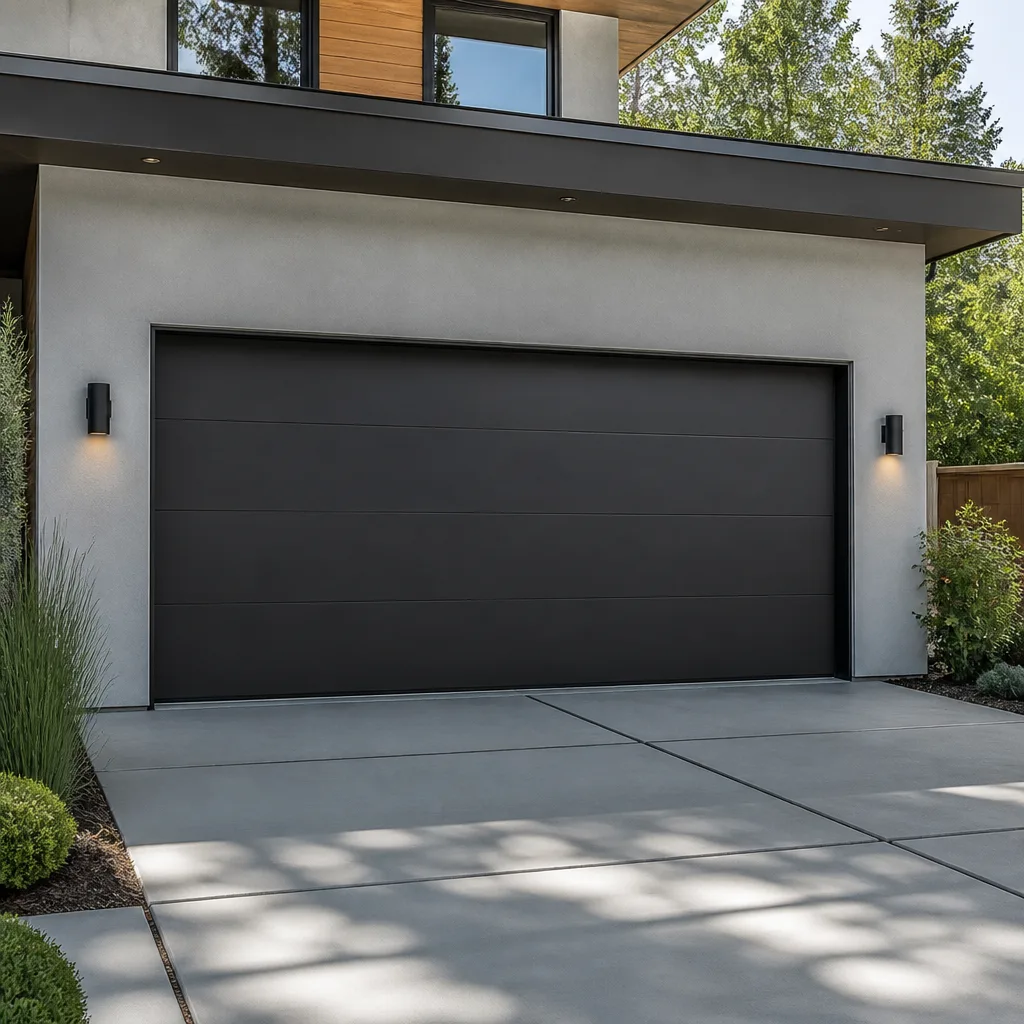 Modern flush
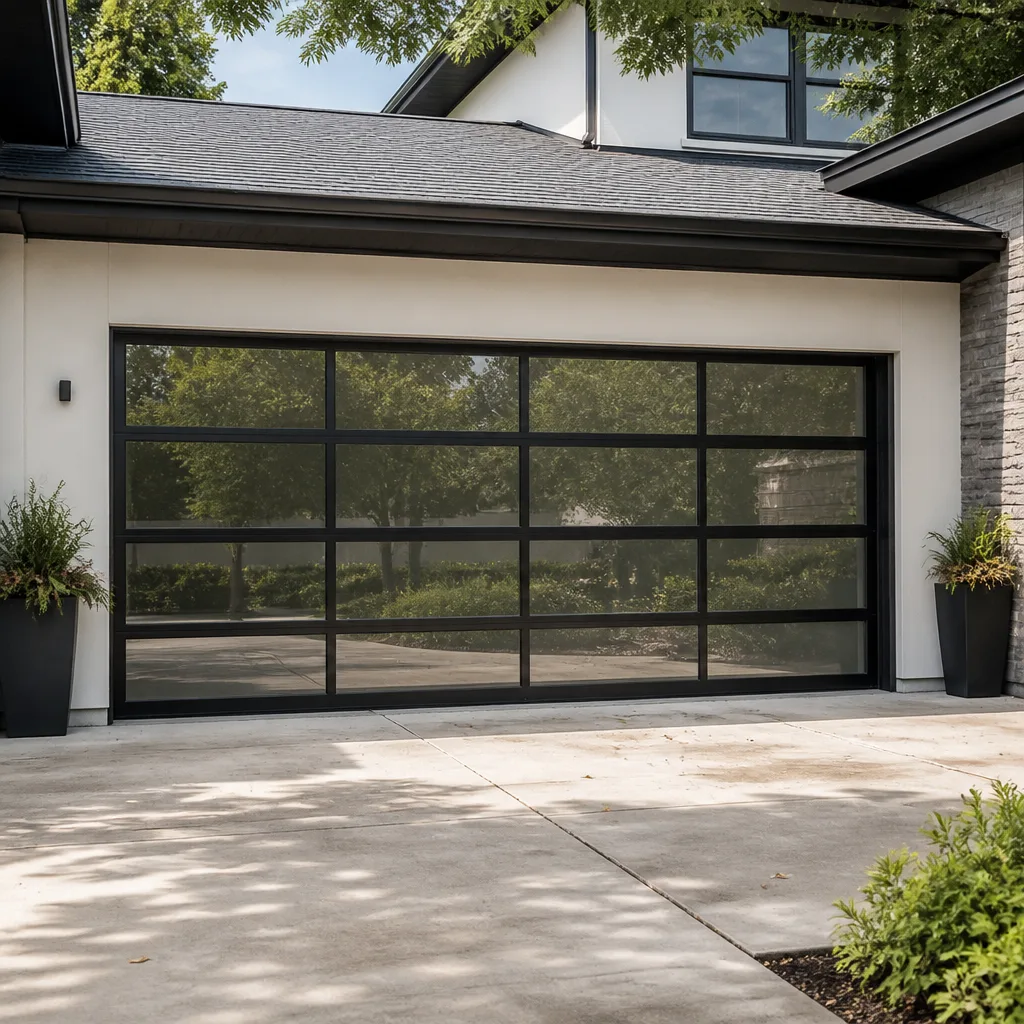 Full-view glass
 LiftMaster openers
 Chamberlain openers
Full 25-point door and opener safety check with every visit - springs, cables, rollers, tracks, and your LiftMaster or Chamberlain opener included
You get a price before we start. It does not change when the pro arrives.
Get your free estimateGarage Door Permits, Codes & Inspections in North Port, FL: What You Need to Know
Most homeowners in North Port treat the permit question as paperwork. Fill out a form, pay a fee, move on. But a garage door installed without the required Charlotte County permit isn’t simply a code violation sitting in a drawer. It’s a door that has never been inspected against Florida’s minimum wind load requirements, and that gap can follow you all the way into an insurance claim after a storm. This guide walks through when a permit is actually required in North Port, what the wind load standards mean for the door you buy, how the inspection process works, and how to check whether a previous installation was ever permitted. You’ll also find the documentation worth keeping after a compliant install, because that paperwork matters more than most people realize.
Quick Answer
A full garage door replacement in North Port always requires a permit from Charlotte County, and the door itself must be rated to Florida Building Code wind load requirements for this area. Repairs are more nuanced: swapping springs, cables, rollers or an opener typically does not need a permit, while structural changes to the opening, tracks or framing usually do. The permit exists so an inspector can confirm the door and its anchoring meet the wind standard before it’s ever tested by a real storm.
Styles & brands we work with
- Raised-panel steel
- Carriage house
- Modern flush
- Full-view glass
- LiftMaster openers
- Chamberlain openers
Table of Contents
- When does a garage door project need a permit in North Port?
- What Florida’s wind load requirements mean for your door
- What a Charlotte County inspector actually checks
- How long permit approval takes in North Port
- How to check if a previous installation was permitted
- The insurance angle: documentation to keep
- Repair versus replacement: where the line sits
- Choosing a contractor who handles permits correctly
When does a garage door project need a permit in North Port?
Full replacement always needs one. If the old door and its tracks come out and a new door system goes in, that’s a permitted project in Charlotte County, no exceptions worth relying on. The reason is straightforward: the door is a large, moving, wind-loaded opening in the building envelope, and the county wants to verify the anchoring and the product’s rating before it’s closed out.
Repairs are where homeowners get confused, and the honest answer is that the threshold depends on what’s being changed. Here’s how it usually breaks down:
- No permit typically required: torsion or extension spring replacement, cable replacement, roller and hinge swaps, opener replacement, sensor and safety-reverse adjustments, and general troubleshooting of a door that’s binding or off-track.
- Permit usually required: replacing the door itself, changing the door’s size or the opening’s dimensions, altering the header or framing, and in many cases replacing the full track and anchoring system.
- Ask the county: a track reconfiguration that changes how the door loads against the wall, or any work that touches the structural framing around the opening. When a job sits near the line, the safe move is a call to the Charlotte County building department rather than a guess.
In our experience across North Port, the jobs that get homeowners into trouble later are the ones where a door was swapped out quietly without a permit because it “looked like a straight replacement.” It usually is a straight replacement. That’s not the point. The point is that the inspection is what proves the installation meets the wind standard, and without it you have a door with no verification behind it. For everyday repairs that don’t trigger a permit, our garage door repair work covers the mechanical side without any county paperwork involved.
What Florida’s wind load requirements mean for your door
Florida Building Code Section 1609 sets wind load requirements, and for this part of the state those requirements are demanding. The standard that matters for a garage door in North Port is the design wind speed the door must be rated to resist. A door that isn’t rated for that load isn’t a compliant door here, no matter how well it’s installed or how good it looks from the street.
What does that mean when you’re shopping? It means the door you buy has to carry a product rating that matches the code requirement for your location, and the installer has to anchor it per the manufacturer’s instructions so the rating actually holds. A few practical points:
- Wind-rated doors are tested and labeled as such. The rating is on the product documentation, not something a contractor can eyeball.
- The rating depends on the whole assembly: door panels, reinforcement struts, hinges, tracks and the anchoring into the wall. A rated door installed with the wrong anchors is not a rated installation.
- Brand matters less than the specific product line and its documented rating. We service LiftMaster, Wayne Dalton and Craftsman systems, among others, and the question we ask first is always whether the specific model carries the rating this area requires, not which name is on the box.
- Impact-rated glazing and reinforced sections are options on many product lines, and the right choice depends on the opening size and what the code requires for that wall.
This is also where an unpermitted job creates real exposure. A door without a documented wind rating and no inspection record behind it is a door your insurer has no reason to trust after a named storm. That’s not a scare tactic. It’s simply how claims documentation works: they ask, and you either have the paperwork or you don’t.
What a Charlotte County inspector actually checks
The inspection isn’t a cosmetic review. It’s a verification that the installed assembly matches what was permitted and meets the code, and it happens in a defined sequence. Here’s how the process typically runs:
- Permit application and product submittal. The permit is filed with the door’s product information and its wind rating documentation. Getting this right up front is what keeps the rest of the process moving.
- Rough or pre-cover inspection where required. Depending on the scope, an inspector may want to see the anchoring and framing before everything is closed in.
- Final inspection. The inspector confirms the installed door matches the permitted product, checks the anchoring and attachment to the structure, and verifies the door operates and that the safety features are in place.
- Closeout. The permit is closed and the inspection record becomes part of the property’s file.
What the inspector is really confirming is that the door as installed is the door that was approved, and that it’s fastened to the building the way the manufacturer and the code require. Openers and their safety features are part of the larger picture too, which is why a permitted install is a good moment to make sure the opener side of the system is squared away. Our garage door opener repair work handles the mechanical and electronic side, and any opener paired with a new door should be set up to match the door’s weight and travel.
One practical note for North Port homeowners: the inspector is looking at the installation, not grading your taste in panels. Finish, color and window style are your call. What has to be right is the structural and wind-rated side of the job.
How long permit approval takes in North Port
Timelines vary with the county’s workload, the completeness of the application and the scope of the job, so anyone quoting you an exact number of days is guessing. What we can tell you is the shape of the process and where time gets lost.
The biggest variable is the submittal. An application with the door’s product documentation and wind rating attached, a clear scope of work and a correct address moves faster than one that’s missing pieces. Review comments and resubmittals are where weeks quietly disappear. Scheduling the inspection after the work is done is usually the shorter part; the approval on the front end is what sets the pace.
That has a knock-on effect for planning a replacement in North Port. A new door isn’t an impulse purchase even in the best case, because the product has to be measured, ordered and delivered before installation can happen, and the permit runs alongside that. If a storm is forecast and you’re thinking about replacing an aging door, starting the process sooner rather than later is the entire strategy. Waiting until the week before a system approaches is how homeowners end up paying for a rushed decision.
Where a permit question sits on a repair, the timeline is different. A broken spring or a door stuck mid-track is a same-day kind of problem, and our garage door spring repair answers that call. Spring work is genuinely dangerous, though. High-tension torsion springs and their cables store enormous force, and the tools and training required to release and reset them safely are not things a homeowner should improvise. We say that plainly because we’ve seen what happens when someone tries. That work belongs to trained technicians, full stop.
How to check if a previous installation was permitted
If you bought a home in North Port and you don’t know the history of the garage door, this is worth ten minutes of your time. An unpermitted installation from a previous owner is a problem that transfers to you, because the property carries it forward.
- Pull the permit history. Contact the Charlotte County building department and ask for the permit records for your address. Permit history is public, and a garage door replacement should show up as its own permit with an inspection record.
- Read the date against the door. If the permit history shows a door replacement and the door looks consistent with that timing, that’s a good sign. If the door is clearly newer than any permit on file, ask questions.
- Check the door’s labeling. Wind-rated products carry labeling or documentation. If there’s nothing on the door and nothing in the county file, treat it as unverified.
- Ask the seller or the prior contractor. If you can get the original invoice or product documentation, keep it. That paperwork is the whole point.
- Plan for what you find. If the door was installed without a permit, the fix is usually to bring it into compliance: have the installation evaluated, and permit and correct whatever doesn’t meet the code. That’s a conversation with the county and a qualified installer, not a DIY project.
In North Port’s newer neighborhoods and resale homes alike, this comes up more than people expect. Doors get replaced quietly, records get lost, and the next owner inherits the uncertainty. Sorting it out before a storm or before a sale is far easier than sorting it out during either.
The insurance angle: documentation to keep
After a named storm, an insurance carrier handling a claim on a home with a damaged or failed garage door will want to know what was installed and whether it met the code. That’s not adversarial. It’s how they determine whether the door performed as it should have or failed because it wasn’t built for this area’s wind loads. The homeowner with good documentation has an easier claim than the homeowner with a shrug.
Here’s what’s worth keeping in a file, paper or digital:
- The permit number and the closed inspection record from Charlotte County.
- The door’s product documentation, including the wind rating and the manufacturer’s installation instructions.
- The written estimate and final invoice from the installer, showing the product installed and the work performed.
- Photos of the installed door and the anchoring, taken after the job is complete.
- Any warranty paperwork for the door and the opener.
None of this is exotic. It’s the ordinary paper trail of a permitted job. The reason it matters in North Port specifically is that the wind standard here is the whole basis for the permit in the first place. A permitted install with the documents in hand tells your insurer exactly what they need to know. An unpermitted install leaves them with questions you probably can’t answer years later.
Repair versus replacement: where the line sits
The permit question is really a question about scope, so it helps to know which jobs are which. Repair keeps the existing door and its structure. Replacement changes the door or the opening in a way the county wants to see. A few common scenarios and where they land:
- Broken spring: repair. No permit. Dangerous work, trained technicians, same-day kind of job.
- Opener failure or upgrade: repair or replacement of equipment, not the door. No permit in the ordinary case.
- Door off track or damaged panel: repair if the same door goes back on the same tracks. If the damage means new tracks or a new door, it’s a replacement.
- New door, same opening: replacement. Permit required.
- Enlarging or altering the opening: replacement plus structural work. Permit required, and likely additional inspections.
When a door is older and the repair bill starts climbing, the honest conversation is often about replacement rather than another round of repairs. That’s a planning conversation, and it comes with a measure, a product selection and a permit.
Choosing a contractor who handles permits correctly
The right contractor doesn’t treat the permit as an obstacle or offer to skip it to save time. They build it into the job from the first conversation. A few things to look for when you’re choosing someone for a replacement in North Port:
- They bring up the permit before you do. A specialist knows a replacement needs one. If you have to raise it, that’s a signal.
- They can tell you which products are rated for this area. A generic answer about “meeting code” isn’t enough. They should be able to point to the product’s rating and explain how the installation preserves it.
- They measure before they quote. A replacement price without a measure is a guess, and a guess is how a job goes sideways after the door arrives.
- They put the price in writing. The written estimate sets the final price, and the permit and installation terms should be in it.
- They know the brands they’re installing. We work with LiftMaster, Wayne Dalton, Craftsman and Raynor among others, and the point isn’t the name. It’s that the specific product line has to carry the right rating for the opening.
A specialist also covers the whole arc, from a small repair through a full new door, so you’re not coordinating one contractor for the door and another for the opener. That matters on a permitted job, because the door and opener have to work together once the inspection is done.
Common Mistakes to Avoid
- Skipping the permit because it “looks like a straight swap.” A replacement is a replacement. The inspection is what verifies the wind rating, and no permit means no verification.
- Buying a door that isn’t rated for this area. A product that would be fine elsewhere may not meet the wind standard here. Check the rating before you buy, not after.
- Assuming a previous owner did it right. Pull the permit history on your North Port home. If the door is newer than any permit on file, that’s worth resolving.
- Letting the permit lapse or the inspection go unscheduled. An open permit is its own headache. Close it out and keep the record.
- Throwing away the documentation. The product rating, the invoice and the inspection record are exactly what an insurer will ask for after a storm.
- Trying spring work yourself to save money. High-tension springs and cables are genuinely dangerous. This is the one part of the trade that should always go to trained technicians.
- Waiting for a storm forecast to start the process. Replacement is measured, ordered and scheduled, and the permit runs alongside it. Starting early is the only way to avoid a rushed decision.
See the difference
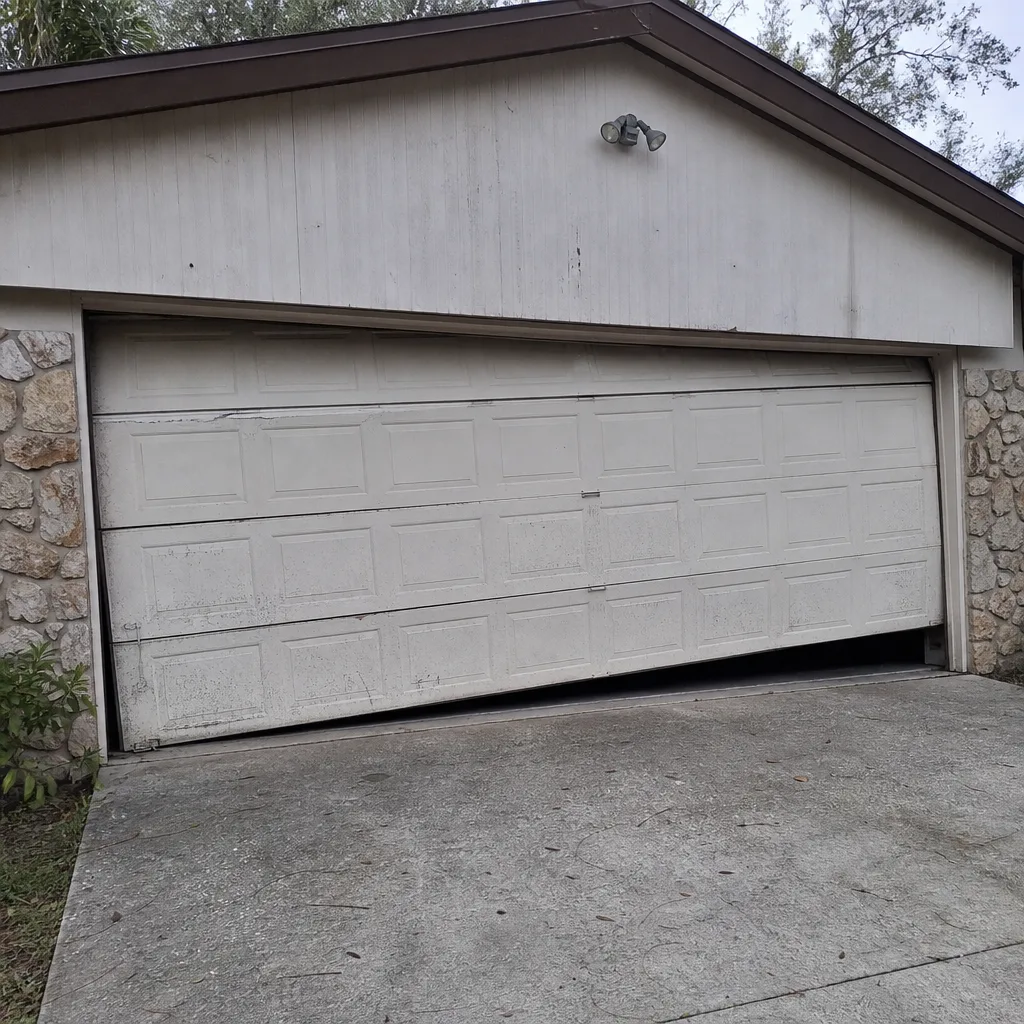 Before
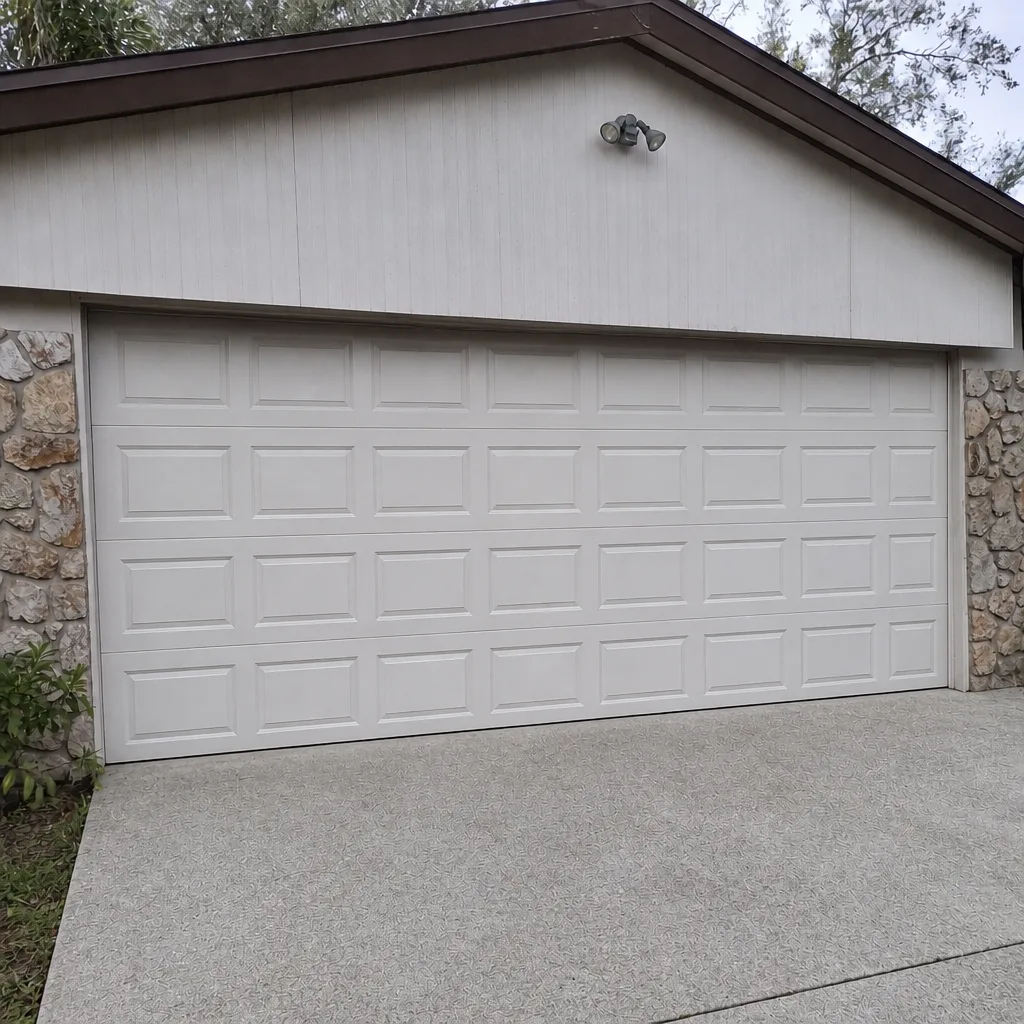 After
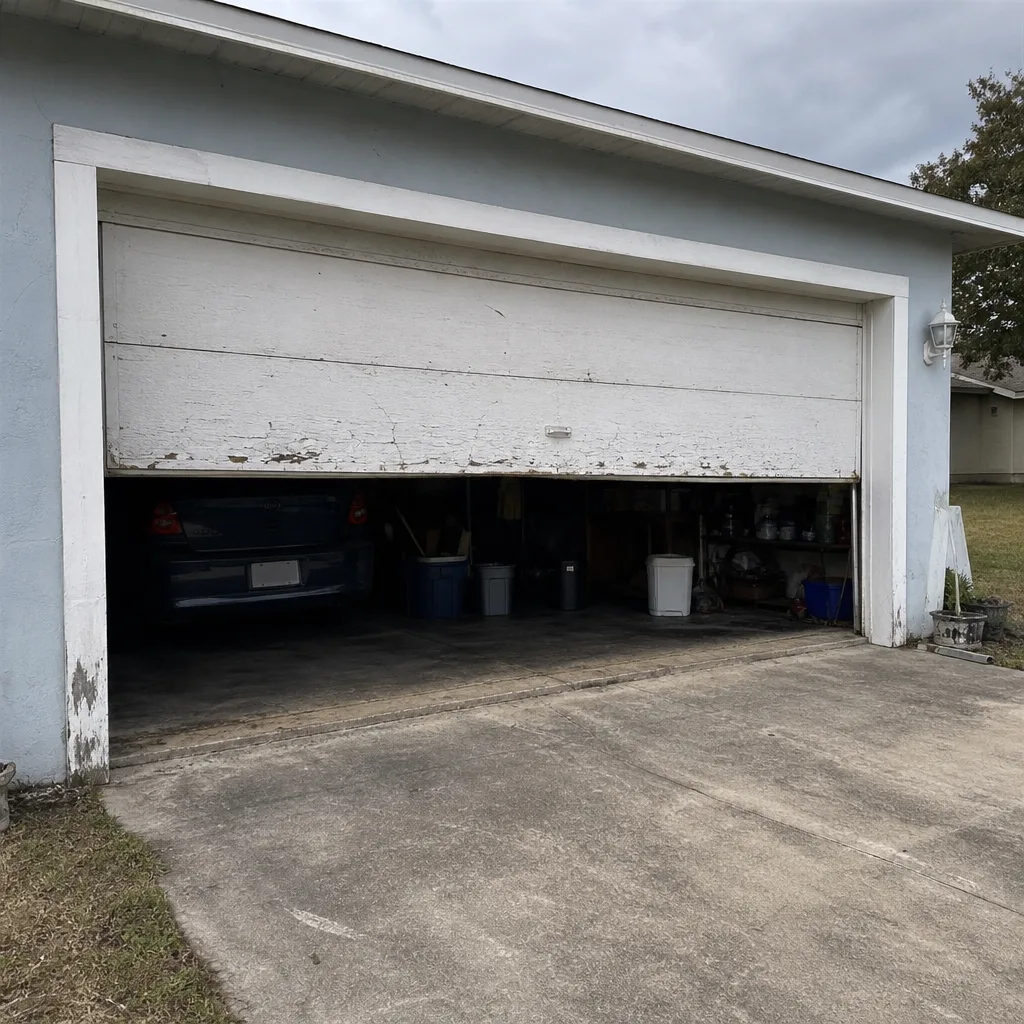 Before
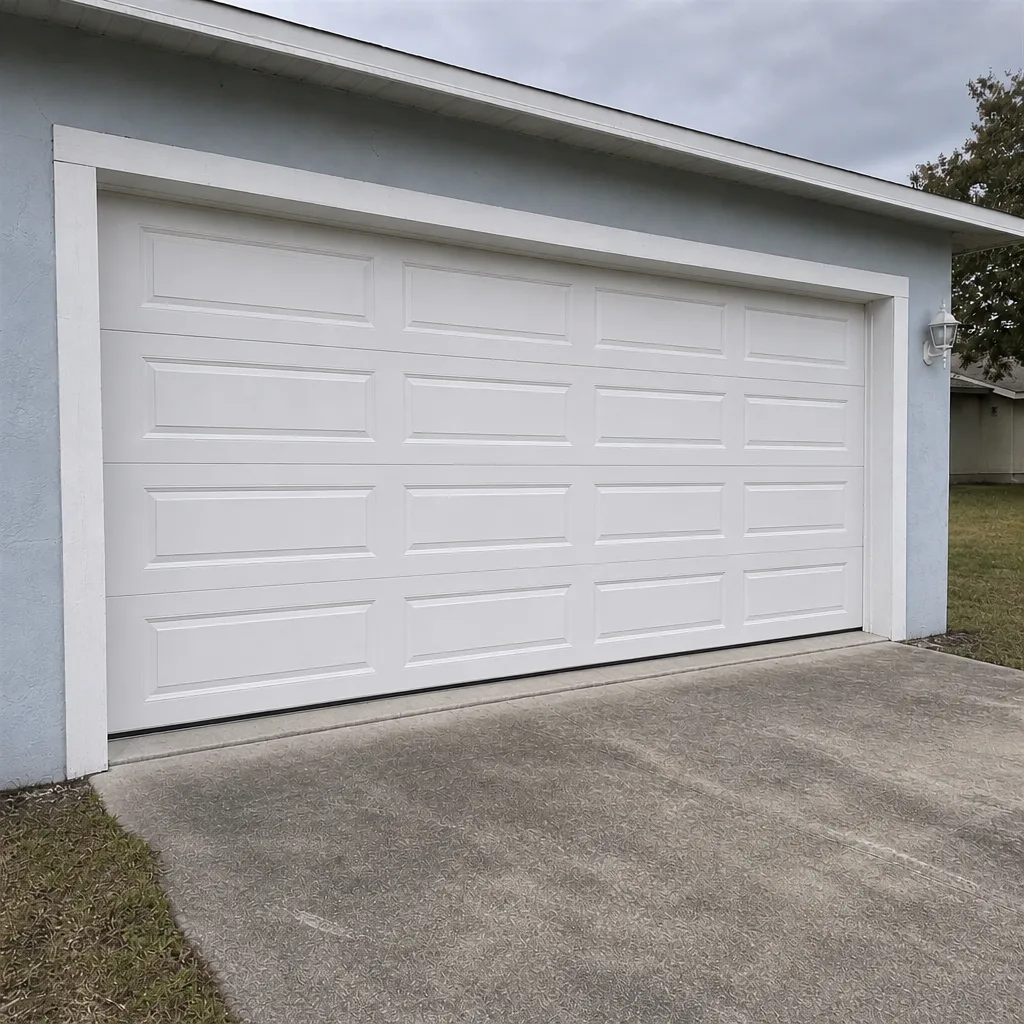 After
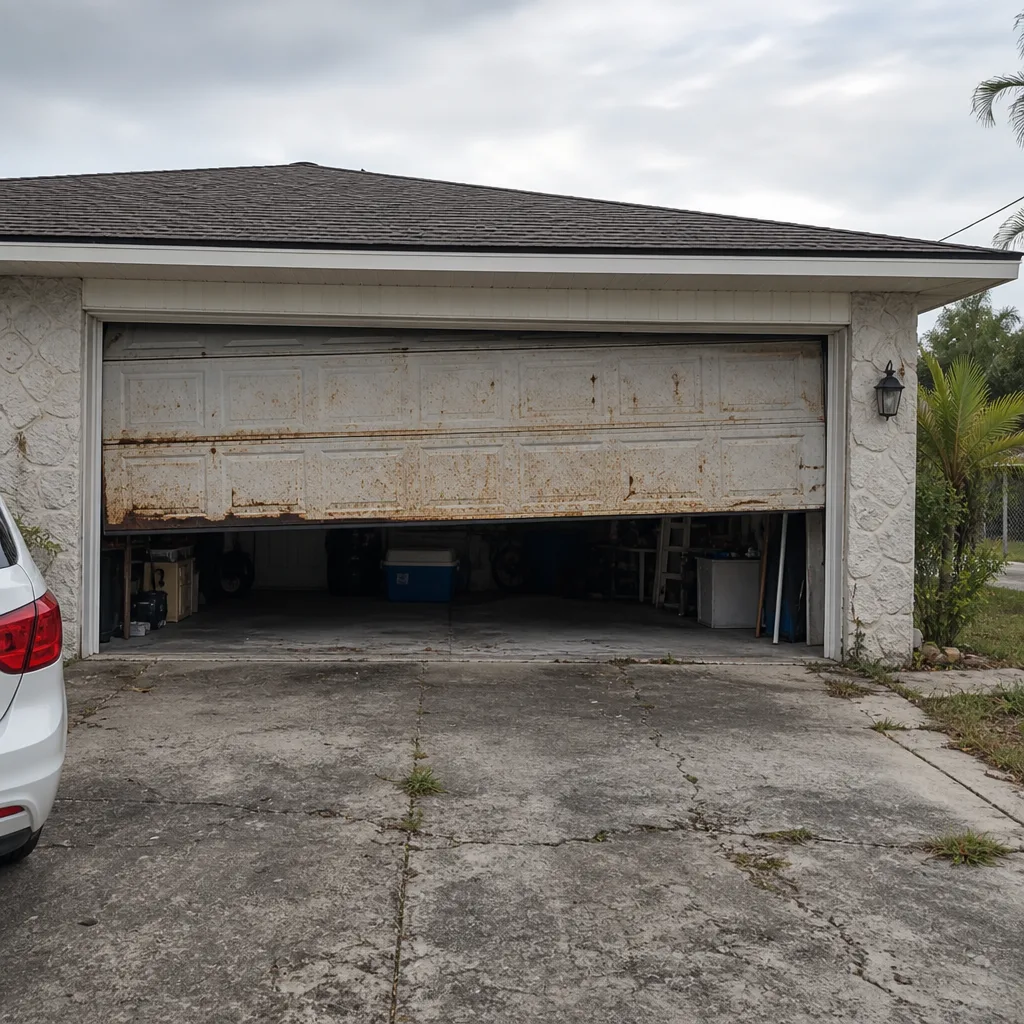 Before
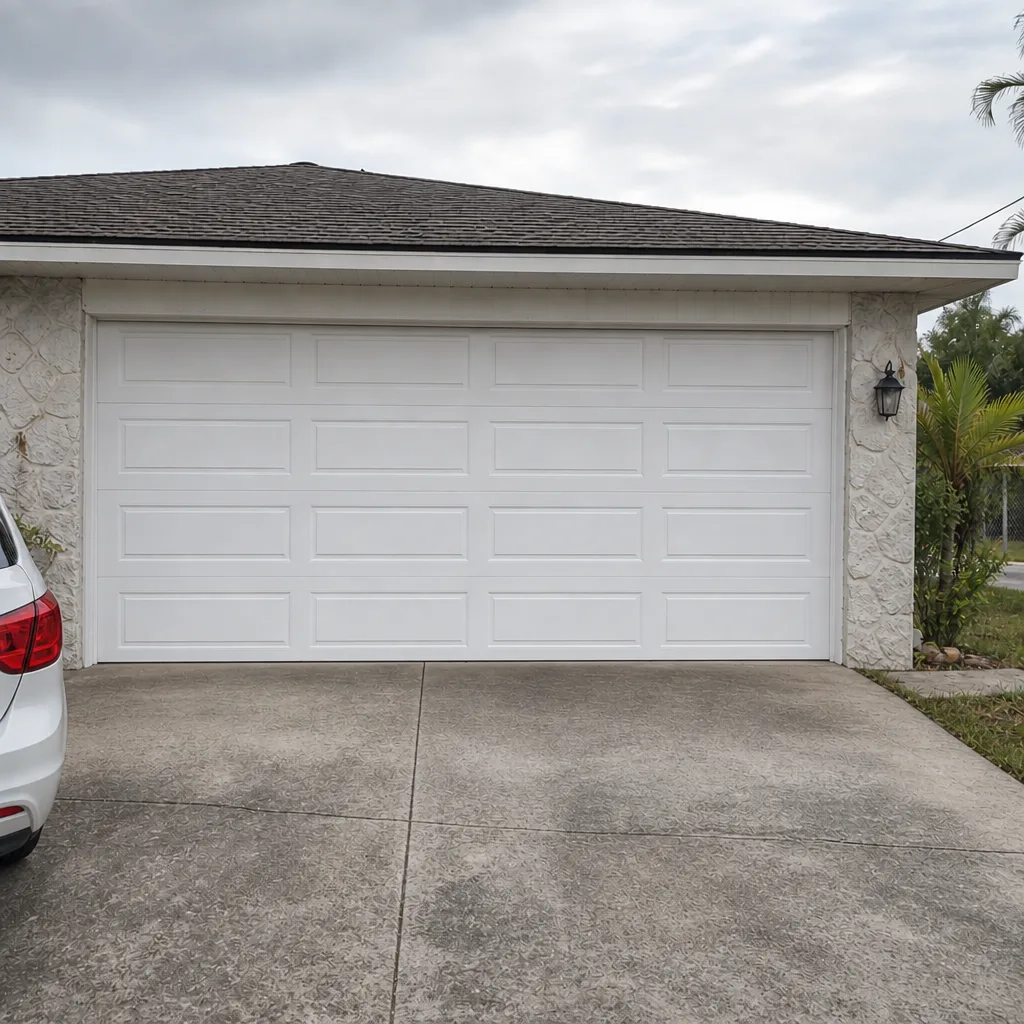 After
When to Call a Professional
Some garage door problems are a phone call, and some are a permit and a scheduled install. Call us when a spring snaps, when the door won’t open or close, when it’s stuck mid-track or hanging off its cables, or when the opener runs but the door doesn’t move. Those are the situations where a specialist needs to look at the system rather than guess over the phone, and where emergency service can make the difference between a secure home and an open one. Call us for a replacement when the door is aged, damaged or due for a wind-rated upgrade, or when you’ve found that a previous installation was never permitted and you want it brought into compliance. North Port Garage Door Repair Pros offers free estimates in North Port. Call (855) 610-6385 and we’ll look at the door, explain the options and give you a written price before anything starts.
Frequently Asked Questions
Yes. A full garage door replacement in North Port requires a permit from Charlotte County, and the door must be rated to the wind load requirement for this area. The permit and the inspection are how the county verifies the installation meets the code. Call (855) 610-6385 for a free estimate on a permitted replacement.
No. Spring, cable, roller and opener repairs typically don’t require a permit because the door and its structure stay in place. Spring work is still a job for trained technicians, since high-tension springs and cables are dangerous to handle without the right tools. Call (855) 610-6385 if a spring has broken.
Ask the Charlotte County building department for the permit history on your address and compare it to the door. A permitted replacement shows up with its own inspection record. If the door is clearly newer than any permit on file, treat the installation as unverified and get it evaluated. Call (855) 610-6385 and we’ll help you sort out what needs to happen next.
The door has to be rated to the design wind speed that Florida Building Code Section 1609 requires for this location, and the rating is documented on the product. The rating only holds if the door is anchored per the manufacturer’s instructions. A specialist can tell you which products meet the requirement for your opening. Call (855) 610-6385 for a free estimate.
The usual path is to bring it into compliance: have the installation evaluated, then permit and correct whatever doesn’t meet the code. That’s a conversation with the county and a qualified installer. It’s also worth resolving before a storm or a sale. Call (855) 610-6385 and we’ll walk through the options.
An insurer handling a claim will want to know what was installed and whether it met the code, so keep your permit record, inspection closeout, product documentation and invoice. A permitted install with the paperwork in hand answers those questions directly. Call (855) 610-6385 for a free estimate on a compliant replacement.
The Bottom Line
The permit for a garage door replacement in North Port isn’t bureaucracy for its own sake. It’s the mechanism that proves the door meets Florida’s wind load requirements and is anchored to hold. Replacements always need one. Repairs usually don’t. The product has to carry the right rating for this area, and the installation has to preserve that rating. Keep the paperwork, because it’s what you’ll reach for after a storm. If you’re unsure where your door stands, that’s a conversation worth having now rather than later. North Port Garage Door Repair Pros is a full-service garage door specialist, and we’ll give you the straight answer along with a written price.
For a door that needs repair or replacement in North Port, call (855) 610-6385 for a free estimate. Starting with North Port Garage Door Repair Pros means the door, the opener and the permit are all handled by people who work on garage doors every day.
Written by the team at North Port Garage Door Repair Pros.